
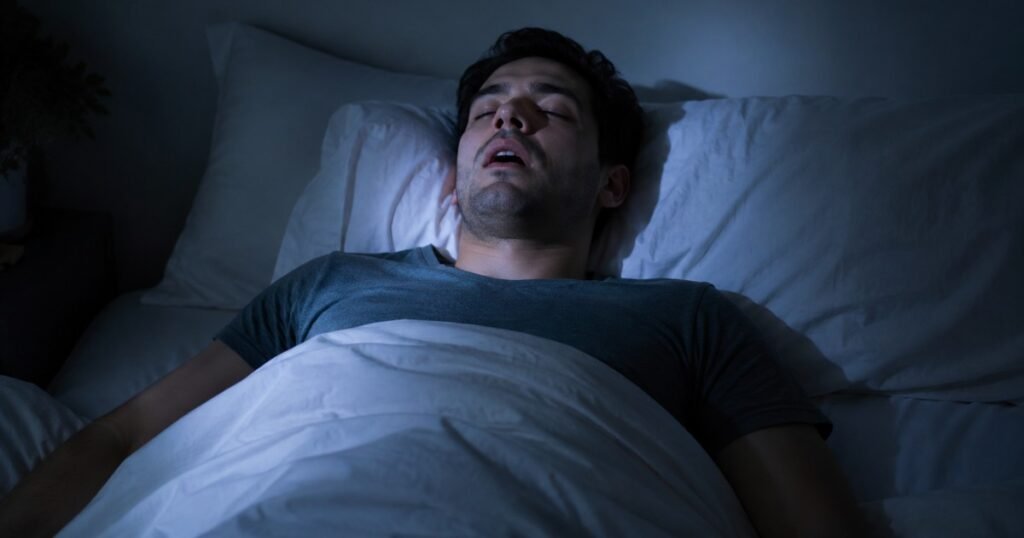
You slept a full eight, maybe nine hours. And yet you woke up feeling like you hadn’t slept at all — heavy-headed, foggy, already reaching for a second cup of coffee before 9 a.m.
If this sounds familiar, you’re not imagining it, and you’re not just “bad at sleeping.” For many people juggling long workdays, young kids, or constant deadlines, this kind of exhaustion gets blamed on stress or a busy schedule. But repeated, unrefreshing sleep like this can sometimes point to something more specific: sleep apnea, a condition where breathing is briefly and repeatedly interrupted during the night — often without the person ever fully waking up or remembering it.
It doesn’t always look the way people expect. Not everyone who has it snores loudly. Not everyone is overweight. And the daytime effects — brain fog, irritability, low energy — can easily get mistaken for ordinary burnout.
This guide walks through the warning signs to watch for, both at night and during the day, how to gently self-screen if you live alone, and what the real path to a diagnosis looks like. A quick and important note before we start: nothing here can diagnose sleep apnea on its own. What it can do is help you recognize the pattern, take it seriously, and know what to bring to a healthcare professional if you decide to get evaluated.
Quick Answer: The Most Important Signs to Watch For
The clearest signs of possible sleep apnea are repeated pauses in breathing during sleep, gasping or choking awake, loud or irregular snoring, and daytime symptoms that don’t go away no matter how much you sleep — things like morning headaches, persistent fatigue, and trouble concentrating.
A short self-check can help you see whether your symptoms form a pattern worth discussing with a doctor:
- Do you snore loudly, irregularly, or in a way that others have commented on?
- Has a partner or family member noticed you stop breathing or gasp during sleep?
- Do you regularly wake with a dry mouth, sore throat, or headache?
- Do you feel unrefreshed even after a full night’s sleep?
- Do you struggle with daytime sleepiness, poor focus, or mood changes?
- Do you have risk factors such as high blood pressure, a family history of sleep apnea, or certain jaw or airway characteristics?
The more of these that sound familiar, the more worth mentioning they are at your next doctor’s visit. On their own, though, none of these symptoms can confirm a diagnosis.
Quick tip: If a partner has actually witnessed breathing pauses or gasping, that’s one of the strongest signals to act on. It’s worth prioritizing a medical evaluation over relying on a smartwatch app or sleep score.
What Are the Most Common Signs You Might Have Sleep Apnea?
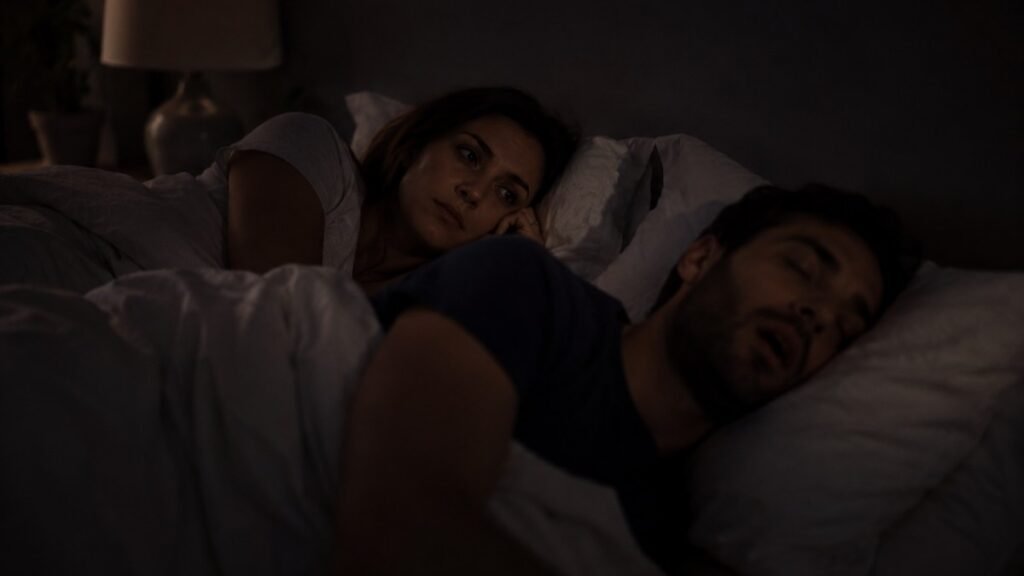
Sleep apnea shows up in two very different windows — while you’re asleep, and the next day. Because most people are unconscious for the first part, it’s often the daytime clues that get noticed first, even though they’re less obviously connected to sleep.
Nighttime Signs You or Your Partner May Notice
- Loud, persistent, or irregular snoring
- Noticeable pauses in breathing
- Gasping, choking, or snorting suddenly awake
- Restless, fragmented sleep with frequent tossing and turning
- Waking up repeatedly through the night
- Waking with a racing heart or a feeling of breathlessness
- Night sweats
- Needing to urinate frequently at night, especially alongside the other signs above
Daytime Symptoms That Are Easy to Miss
- Feeling drained despite sleeping 8–9 hours
- Waking up feeling like you never actually slept
- Morning headaches
- A dry mouth or sore throat when you wake up
- Brain fog and trouble concentrating
- Forgetfulness or trouble retaining information
- Irritability or noticeable mood shifts
- Sleepiness that shows up during the day, not just at night
- Lower energy or stamina, even during light exercise
Why “I Sleep Enough” Doesn’t Always Mean You’re Rested
There’s a real difference between sleep duration and restorative sleep. You can technically be in bed for nine hours and still have your sleep constantly interrupted at a level too subtle to fully wake you — but disruptive enough to prevent your body from cycling properly through deeper, more restorative stages.
This is part of why the fatigue often gets misread. It’s easy to pin it on work stress, a demanding toddler, too much caffeine, or simply “not being a morning person.” Those things can absolutely affect sleep too — but when the exhaustion is persistent, unexplained, and doesn’t improve even when you prioritize rest, it’s worth looking at the bigger picture. If you’ve also noticed waking up at 3am or waking up in the middle of the night on a regular basis, that pattern is also worth tracking alongside these symptoms.
Worth noting: Persistent, severe daytime sleepiness isn’t the same as being tired from a busy life. It deserves a closer look rather than being brushed off as laziness or overload.
How Can You Tell the Difference Between Normal Snoring and Sleep Apnea?
Snoring alone doesn’t mean much — plenty of people snore occasionally without any underlying issue. The difference usually comes down to the pattern of the snoring, not just its volume.
What Ordinary Snoring May Look Like
- Fairly continuous, steady snoring through the night
- No witnessed pauses in breathing
- No gasping or choking sounds
- No noticeable daytime symptoms
Warning Signs That Snoring May Be Related to Sleep Apnea
- Snoring that suddenly stops, followed by gasping or choking
- Repeated cycles of loud snoring and silence
- A partner who says it looks like you stopped breathing
- Snoring paired with severe fatigue, morning headaches, or brain fog during the day
Important: You Don’t Have to Snore to Have Sleep Apnea
This is one of the most common misconceptions. Some people with sleep apnea snore quietly, occasionally, or not at all — especially if their airway narrows in a way that doesn’t produce the classic loud snoring sound. If you’re checking your own symptoms and think “well, I don’t really snore, so it’s probably not that,” it’s worth pausing on that assumption. The absence of snoring shouldn’t be used to rule sleep apnea out on its own.
| Feature | Regular Snoring | Possible Sleep Apnea |
|---|---|---|
| Snoring pattern | Steady, continuous | Loud snoring interrupted by silence |
| Breathing pauses | None noticed | Present, sometimes witnessed by a partner |
| Gasping or choking | Rare or absent | Repeated, often waking the person briefly |
| Morning symptoms | Usually minimal | Headaches, dry mouth, sore throat |
| Daytime fatigue | Generally not significant | Persistent, unexplained tiredness |
Can You Have Sleep Apnea If You Are Skinny, Fit, or an Athlete?
Yes. Sleep apnea is often associated with excess weight, but weight is only one of several risk factors — not a requirement. People at a healthy weight, and even competitive athletes, can develop it.
Why Body Weight Is Only Part of the Picture
Extra weight around the neck and airway can increase risk, but it’s not the whole story. Airway anatomy plays a major role regardless of body size.
Other Factors That Can Narrow or Block the Airway
- Jaw or facial structure
- A naturally narrower upper airway
- Enlarged tonsils or similar anatomical factors
- Family history of sleep apnea
- Age-related changes in muscle tone
- Chronic nasal obstruction
- Certain medical or neurological conditions
Why Fit People and Athletes Often Miss the Signs
Being in good physical shape doesn’t protect against an anatomically narrow airway — the two are unrelated. If anything, high fitness levels can make the fatigue harder to catch, because it’s easy to explain away persistent tiredness as overtraining, a hard training block, or simply pushing too hard at work and the gym at once. Symptoms and testing matter far more than how someone looks or how active they are.
Quick tip: “I’m not overweight” and “I don’t snore” are two of the most common reasons people rule themselves out — and neither one is a reliable way to do so.
How to Tell If You Have Sleep Apnea When You Live Alone
Without a partner to notice the nighttime signs, self-screening takes a bit more intention. None of the following methods can diagnose sleep apnea, but together they can help you build a clearer picture to bring to a doctor.
Track Your Morning Symptoms
Each morning, take note of:
- Headaches
- Dry mouth
- Sore throat
- A feeling of not being rested
- Daytime sleepiness
- Brain fog or trouble focusing
A single rough morning means little. A repeated pattern over several weeks means more.
Use Audio or Video Recording Carefully
If it’s practical, recording yourself overnight can offer some useful clues. Listen or watch for repeated cycles of loud snoring, sudden silence, gasping, or choking sounds. This kind of recording can raise a flag worth discussing with a doctor, but it isn’t a diagnostic tool, and it shouldn’t be used to reassure yourself that everything is fine either.
Review Your Sleep and Daytime Patterns
A simple sleep diary can go a long way. Jot down:
- Bedtime and wake time
- Any awakenings during the night
- Morning symptoms
- Daytime energy levels
Look at this over one to two weeks rather than drawing conclusions from a single night — one bad night could mean anything, but a repeated weekly pattern is far more informative.
Use Wearable Sleep Data as a Clue, Not Proof
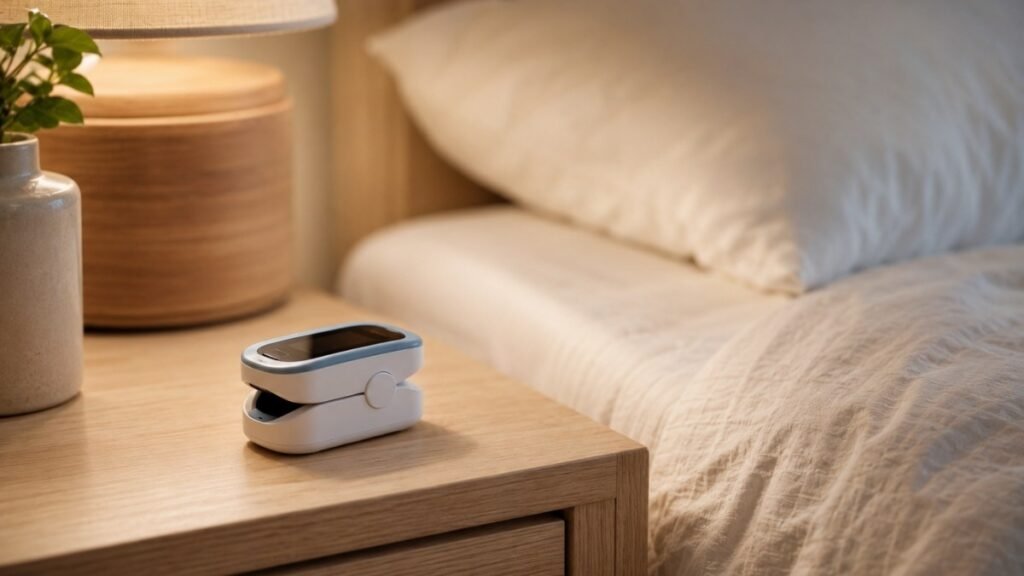
If you use a fitness tracker or smart ring, look for trends rather than one-off numbers — repeated overnight oxygen dips, recurring breathing disturbance flags, or unusual heart rate patterns across multiple nights. Consumer devices weren’t built to diagnose sleep apnea, and their limitations matter more than any single night’s reading.
Can Apple Watch, Oura Ring, or Other Wearables Tell If You Have Sleep Apnea?
Wearables can flag patterns worth paying attention to, but they cannot diagnose sleep apnea on their own — that requires clinical-grade testing.
What Wearables May Help You Notice
- Repeated drops in overnight blood oxygen
- Patterns of breathing disturbance
- Unusual overnight heart rate changes
- Increased sleep disruption
- Trends that repeat across many nights, not just one
What Wearables Cannot Do Reliably
- Confirm a diagnosis
- Identify the specific type or severity of sleep apnea
- Catch every single breathing interruption
- Replace a professional sleep study
How to Interpret the Data Without Panicking
Look for repeated trends, not isolated bad nights — everyone has an off night now and then. Compare what the device shows against how you actually feel during the day, and if something looks concerning, bring the reports to a healthcare professional rather than trying to interpret them alone.
Worth remembering: A wearable can raise a useful question. It cannot answer it. A reassuring “sleep score” also shouldn’t be used to dismiss real, persistent symptoms.
What Is the Most Reliable Way to Find Out If You Have Sleep Apnea?
The most reliable path combines your own symptom awareness with professional testing — self-observation alone isn’t enough to confirm or rule anything out.
Step 1: Recognize the Pattern of Symptoms
Look at your nighttime signs, daytime symptoms, and risk factors together, rather than reacting to any single symptom in isolation.
Step 2: Complete a Clinical-Style Risk Screening
Many clinicians use simple screening checklists that weigh factors such as:
- Snoring
- Tiredness
- Observed breathing pauses
- Blood pressure history
- Body and neck characteristics
- Age
- Family history
30-Second Sleep Apnea Risk Check:
- I snore loudly or irregularly
- Someone has noticed me pause breathing or gasp during sleep
- I feel tired or unrefreshed most mornings, regardless of hours slept
- I have high blood pressure or a family history of sleep apnea
- I struggle to stay alert during the day, even in low-stimulation moments
A tool like this estimates risk. It does not diagnose sleep apnea — that distinction matters.
Step 3: Speak With a Healthcare Professional
A primary care clinician is usually the right starting point. They can evaluate your symptoms, review risk factors like sleep and blood pressure, and refer you onward. Depending on what they find, a sleep medicine specialist or another relevant professional may be brought in.
Step 4: Complete a Professional Sleep Test
Testing is the only way to get an actual diagnosis. The two main routes are home sleep apnea testing and overnight in-lab polysomnography — covered in more detail next.
Home Sleep Test vs. In-Lab Sleep Study: Which Is More Accurate?
Both tests can diagnose sleep apnea, but they’re suited to different situations — the right choice depends on your symptoms and risk level, not on which one sounds more convenient.
At-Home Sleep Apnea Testing
A home test typically involves a portable device that measures airflow, effort, and oxygen levels while you sleep in your own bed. People often prefer it because it takes place in a familiar environment and uses fewer sensors than a full lab study. Its main limitation is that it’s generally best suited to people with a higher likelihood of moderate-to-severe sleep apnea; it may not be sufficient for more complex cases or inconclusive results.
Overnight In-Lab Polysomnography
An in-lab study takes place at a sleep center, where a technician monitors brain activity, breathing, oxygen levels, heart rate, and muscle movement overnight, usually through several sensors attached to the body. Because it captures more detailed data, it can offer a more comprehensive assessment — which is why a clinician may recommend it for complex cases, other suspected sleep disorders, or when a home test result doesn’t clearly explain the symptoms.
Which Test Is Right for You?
That decision depends on your symptoms, medical history, and a clinician’s judgment — not personal preference alone. If a home test comes back negative or unclear but symptoms persist, further evaluation with an in-lab study is often the next step.
| Home Sleep Test | In-Lab Sleep Study | |
|---|---|---|
| Location | Your own home | Sleep center or clinic |
| Monitoring scope | Fewer sensors, focused on breathing and oxygen | Comprehensive: brain waves, breathing, oxygen, heart rate, movement |
| Comfort | Familiar environment | Less familiar, more equipment |
| Typical use case | Higher likelihood of moderate-to-severe sleep apnea | Complex cases, inconclusive home results, other suspected sleep disorders |
| Limitations | May miss milder or atypical cases | Requires an overnight stay at a facility |
What Should You Prepare Before Seeing a Doctor?
Walking in prepared makes the appointment far more useful — for you and for the clinician.
Keep a 1–2 Week Sleep and Symptom Log
Track:
- Bedtime and wake time
- Estimated sleep duration
- Nighttime awakenings
- Morning headaches or dry mouth
- Daytime fatigue and sleepiness
- Caffeine and alcohol timing
- Exercise and stress patterns
Collect Relevant Evidence
- Any audio or video recordings
- Wearable sleep reports or trend summaries
- Notes from a partner or family member who has observed your sleep
- A current list of medications and supplements
Write Down Your Most Important Questions
- Which sleep test is appropriate for me?
- Could my symptoms have another cause?
- Should I have a home test or an in-lab study?
- What happens if my initial test is inconclusive?
Checklist: What to Bring to a Sleep Apnea Evaluation
- Two weeks of sleep and symptom notes
- Wearable data or reports, if available
- Any recordings of nighttime breathing
- Input from a partner or roommate, if possible
- A current medication and supplement list
- Your written list of questions
What Happens During a Professional Sleep Study If You Cannot Fall Asleep?
What the Setup Usually Involves
During an in-lab study, sensors are typically attached to track brain activity, breathing, oxygen levels, and movement. It can feel unfamiliar at first — a little like wearing a lot of small equipment while trying to relax.
You Don’t Need a Perfect Night’s Sleep
This is one of the most common worries, and it’s understandable — many people assume that if they can’t fall asleep quickly or sleep restlessly, the whole test is wasted. In reality, sleep studies are designed to gather meaningful data from whatever sleep does occur, even if it’s fragmented or shorter than usual.
How to Make the Night More Comfortable
- Follow the sleep center’s preparation instructions closely
- Bring approved personal comfort items if the facility allows it
- Tell the technician if something feels uncomfortable or confusing
Quick tip: Feeling nervous about the wires and equipment is extremely common. Mentioning it to the technician is normal, not something to feel self-conscious about.
What Can You Do Without Medication While Waiting for Evaluation?
While you wait for testing or a diagnosis, there are gentle, non-drug adjustments that may ease symptoms — though none of them replace an actual evaluation.
Sleep Position Adjustments
Side sleeping may reduce symptoms for some people, since it can help keep the airway more open than sleeping flat on the back. A supportive pillow or a simple positional aid can make side sleeping more comfortable over time. This is a comfort measure, not a treatment for the underlying cause.
Avoid Alcohol Near Bedtime
Alcohol relaxes throat muscles, which can worsen nighttime breathing in some people. Shifting the timing of your last drink earlier in the evening, or reducing how much you have close to bed, is a practical, low-effort adjustment.
Support a Consistent Sleep Routine
Keeping regular sleep and wake times helps your body settle into a steadier rhythm. It also matters for accuracy — chronic sleep deprivation on its own can worsen daytime fatigue and make it harder to tell which symptoms are coming from what. If you’re also dealing with fragmented nights, our guide on how to sleep through the night covers gentle routine adjustments that can help in the meantime.
Address Nasal Congestion and Breathing Comfort
Managing ongoing nasal obstruction — through appropriate, doctor-approved methods — can support easier breathing at night. It’s worth being clear, though, that nasal strips and similar products manage comfort; they don’t treat sleep apnea itself.
Consider Sustainable Weight Management, If Relevant
For some people, weight management can be one part of a broader plan discussed with a doctor — not a requirement for everyone, and not a guaranteed fix on its own.
| Symptom | Low-Risk Habit Adjustment | When to Seek Professional Help |
|---|---|---|
| Restless sleep on your back | Try side sleeping with a supportive pillow | Symptoms continue despite position changes |
| Waking with a dry mouth | Manage nasal congestion appropriately | Congestion is chronic or unexplained |
| Fragmented sleep after evening drinks | Limit alcohol close to bedtime | Gasping or choking occurs even without alcohol |
| Ongoing daytime fatigue | Keep consistent sleep and wake times | Fatigue persists despite good sleep habits |
What Should You Avoid Doing Before You Know the Cause?
- Don’t assume fatigue is purely a lifestyle problem. Persistent, severe tiredness deserves more than being blamed on stress, caffeine, or a packed schedule.
- Don’t rule out sleep apnea because you’re thin or don’t snore. Anatomy and individual risk factors matter more than appearance.
- Don’t diagnose yourself from a wearable alone. This cuts both ways — avoid unnecessary panic over one bad reading, and avoid false reassurance from a good sleep score.
- Don’t rely on unverified anti-snoring products as a substitute for evaluation. Treating the snoring sound without understanding its cause can mean missing an underlying breathing issue entirely.
Why It’s Important to Follow Up If You Suspect Sleep Apnea
The Impact of Untreated Sleep-Disordered Breathing
Left unaddressed, disrupted nighttime breathing can contribute to ongoing daytime fatigue, difficulty concentrating, and noticeable effects on mood and day-to-day quality of life. Over time, it’s also been linked to broader health concerns worth discussing with a doctor, including its connection to sleep and blood pressure.
When Symptoms Deserve Prompt Medical Attention
- Repeated, witnessed pauses in breathing
- Gasping or choking during sleep
- Severe daytime sleepiness
- Symptoms that interfere with driving, work, or everyday safety
Important: If sleepiness ever makes it hard to stay alert behind the wheel, treat that as urgent. Avoid driving while dangerously drowsy, and prioritize getting evaluated.
FAQ
What are the most common warning signs and hidden symptoms that indicate you might have sleep apnea?
The clearest signs are loud or irregular snoring, witnessed pauses in breathing, and gasping or choking during sleep. The “hidden” symptoms are the daytime ones people often miss — morning headaches, a dry mouth, brain fog, irritability, and persistent fatigue that doesn’t improve no matter how much you sleep.
Can you still have sleep apnea if you are skinny, fit, or do not snore at all?
Yes. Weight and snoring are just two of many risk factors. Airway anatomy, jaw structure, family history, and other factors can lead to sleep apnea in people who are lean, athletic, and quiet sleepers.
How do I know if my chronic daytime fatigue and brain fog are caused by sleep apnea or just poor sleep habits?
Look at the pattern rather than a single day. If fatigue and brain fog persist even when you sleep enough hours, keep a consistent schedule, and rule out obvious lifestyle causes, that’s a stronger signal worth discussing with a doctor — especially alongside any nighttime signs like snoring or witnessed breathing pauses.
My partner says I stop breathing or gasp for air in my sleep—should I get tested for sleep apnea immediately?
This is one of the clearest signals to act on. Witnessed breathing pauses or gasping are strong enough on their own to warrant a conversation with a healthcare professional, even without other symptoms present.
Are smartwatches and smart rings like the Apple Watch or Oura Ring accurate enough to diagnose sleep apnea?
No. They can flag useful patterns — like repeated oxygen dips or breathing disturbances — but they aren’t diagnostic tools. Any concerning trend from a wearable is worth bringing to a doctor rather than relying on for a diagnosis.
What is the official process for getting diagnosed with sleep apnea, and what kind of doctor should I see?
Start with a primary care clinician, who can evaluate your symptoms and refer you for testing if needed. From there, a sleep medicine specialist is typically involved in arranging and interpreting a home or in-lab sleep study, which is the only way to confirm a diagnosis.
What is the difference between an at-home sleep test and an overnight in-lab sleep study in terms of accuracy?
A home test measures fewer signals (like airflow and oxygen) in your own bed, and works well for higher-likelihood, more straightforward cases. An in-lab study monitors more data points — including brain activity and muscle movement — making it more comprehensive for complex or inconclusive cases.
What happens during a professional sleep study if I can’t fall asleep with all the wires attached?
That’s a common concern, but sleep studies are designed to work with whatever sleep you do get, even if it’s restless or shorter than a normal night. You don’t need a perfect night’s sleep for the test to provide useful information.
Final Thoughts
Repeated nighttime breathing changes, ongoing daytime exhaustion, and sleep that never quite feels restorative are worth taking seriously — not as something to fear, but as clues your body is giving you. Use the signs in this guide, along with careful self-observation, as a starting point. From there, professional evaluation is what actually turns those clues into answers.
A suspected sleep disorder is not something you have to carry indefinitely or figure out alone. It’s a solvable health concern, and identifying the cause is genuinely the first real step toward sleep that leaves you feeling rested again.
🏠 Behind This Guide
Feeling exhausted after what should have been a full night’s sleep is surprisingly common—but it’s also one of the easiest problems to dismiss. Many people assume it’s just stress, getting older, or a busy lifestyle, when the real cause can sometimes be hidden during sleep itself.
That’s why we created this guide: to help you recognize the patterns that may point to sleep apnea, understand what home observations can (and can’t) tell you, and know when it’s time to seek a professional evaluation.
This guide is built around three essentials:
- 💤 Recognizing the Warning Signs — The nighttime and daytime symptoms that deserve attention.
- 📋 Screening Your Risk — Practical self-checks, wearable insights, and what to track before seeing a doctor.
- 🩺 Getting the Right Diagnosis — Understanding home sleep tests, in-lab sleep studies, and what to expect during the evaluation process.
Because the goal isn’t to diagnose yourself.
It’s to recognize the signs early and take the right next step toward better sleep and better health.
📚 Related Reading
- Why Do I Keep Waking Up in the Middle of the Night? — Learn the most common reasons sleep gets interrupted and what you can do to stay asleep longer.
- Why Am I Waking Up at 3 AM Every Night? — Discover why waking at the same time each night happens and when it may signal an underlying sleep issue.
- Sleep and Blood Pressure: How They’re Connected — Understand how poor sleep can affect your heart health and why quality sleep matters for healthy blood pressure.
- How Much Deep Sleep Do You Really Need? — Find out how much deep sleep adults typically need, why it matters, and what can reduce it.
- How to Sleep Through the Night Naturally — Explore practical, evidence-based habits that can help you sleep more soundly without relying on medication.
❤️ A Final Note
Good sleep rarely comes from finding one perfect tip. More often, it comes from understanding your body, building healthier habits, and taking the right next step when something doesn’t feel right.
At Nourishdao, we believe trustworthy health information should be practical, reassuring, and easy to understand—not overwhelming or filled with unnecessary jargon.
Our goal is simple: helping you make confident decisions that lead to healthier sleep and a healthier life.