
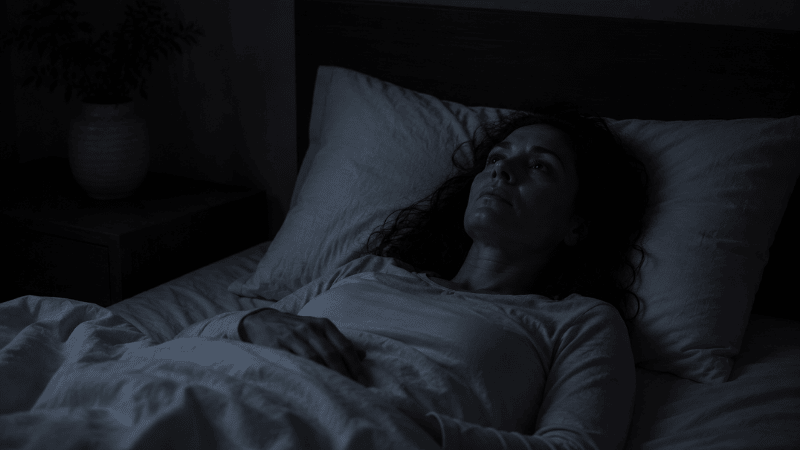
You know the feeling. One moment you’re asleep, the next you’re staring at the ceiling with no obvious reason to be awake. Maybe it’s 1am. Maybe it’s 3. Maybe it happens once a night, maybe three times. Sometimes you drift back within minutes. Sometimes you lie there for an hour, watching the dark, calculating how much sleep you have left, getting progressively more frustrated.
Waking up in the middle of the night is one of the most common sleep complaints among adults — more common, in fact, than difficulty falling asleep in the first place. Research published in the Journal of Psychiatric Research found that more than 35% of adults wake during the night at least three times per week. Yet despite how widespread it is, it remains one of the least well-understood sleep problems, partly because it happens while you’re asleep and partly because it has so many different causes that look identical from the inside.
This guide is a complete reference. It covers every major cause of nighttime waking — biological, environmental, behavioral, and medical — and gives you specific, evidence-based tools for each one. Whether you wake once and return easily, or you wake repeatedly and struggle to get back to sleep, this guide will help you identify what’s happening and what to do about it.
Key Takeaways
- Waking in the night is biologically normal at sleep cycle transitions — the problem is not waking itself but failing to return to sleep quickly, and the cumulative sleep loss that results.
- The CDC recommends adults sleep at least 7 hours per night; fragmented sleep that totals 7 hours still produces worse health outcomes than consolidated sleep of the same duration.
- More than 35% of adults wake at least three nights per week, according to research in the Journal of Psychiatric Research — making this one of the most common sleep complaints in the population.
- The most fixable causes — alcohol timing, bedroom temperature, stress-driven cortisol, blood sugar, light, and sound — account for the majority of nighttime waking in otherwise healthy adults.
- When waking is persistent, frequent, and accompanied by daytime impairment, it meets the clinical definition of sleep maintenance insomnia, which responds well to CBT-I (Cognitive Behavioral Therapy for Insomnia).
Why Waking at Night Is Biologically Normal — and When It Becomes a Problem
Sleep is not a flat, continuous state. It cycles through stages approximately every 90 minutes — progressing from light sleep through deep slow-wave sleep and into REM sleep, then looping back. At the end of each cycle, there is a natural transition point where the brain briefly returns toward lighter sleep or even wakefulness.
For most people, most of the time, these transitions are invisible. The brain passes through them in seconds and returns seamlessly to the next cycle without any memory of the interruption. Brief awakenings between cycles — lasting 30 seconds to two minutes — are entirely normal and expected. They are not a problem.
The problem begins when the threshold for these transitions is low enough — from internal signals like cortisol or pain, or external ones like noise or temperature — that the brief arousal becomes a full waking. And then a second problem layers on top: being unable to return to sleep quickly after waking.
The second half of the night is particularly vulnerable because sleep architecture changes over the course of the night. Deep slow-wave sleep is concentrated in the first two to three cycles. The later cycles contain progressively more REM sleep, which is lighter, more easily disrupted, and more sensitive to internal and external stimuli. This is why most middle-of-the-night waking happens between 2am and 5am — not because something specifically goes wrong at those hours, but because sleep is naturally lighter and more fragile during that window.
Understanding this helps explain why the same person who sleeps soundly from 11pm to 2am can then struggle for the rest of the night. It’s not that something changed between midnight and 3am — it’s that the sleep architecture shifted, and the same disruptive factors that were invisible earlier are now enough to produce waking.
The Complete Causes of Waking Up in the Middle of the Night
Biological and Physiological Causes
Sleep cycle transitions As described above, the natural transition between sleep cycles can become full waking when arousal thresholds are low. This is the underlying mechanism that all other causes exploit — they don’t create waking from scratch, they lower the threshold at the most vulnerable moments.
Cortisol and stress hormones Cortisol follows a circadian rhythm — lowest in the middle of the night, beginning to rise in the early morning hours to prepare the body for waking. Under chronic stress, this curve shifts earlier and rises more steeply, producing premature alerting at 2, 3, or 4am. The characteristic signature: waking with an immediately active mind, thoughts arriving quickly, no grogginess.
This is among the most common causes of nighttime waking in working adults and high-stress individuals. Addressing it requires daytime intervention — stress management, physical movement, and a deliberate shutdown ritual at the end of the workday — more than any bedtime strategy.
Blood sugar fluctuations When blood glucose drops during the night, the body releases cortisol and adrenaline to compensate. These are alerting hormones, and they can trigger waking at 2–4am, often accompanied by mild restlessness, anxiety, or a faint sense of hunger. This pattern is most common in people who eat early dinners, skip dinner, eat high-glycemic meals in the evening, or have blood sugar regulation challenges. A small, balanced pre-sleep snack — protein plus complex carbohydrate — can stabilize overnight glucose for people who notice this pattern.
Age-related sleep architecture changes Sleep architecture changes with age. Adults over 50 spend progressively less time in deep slow-wave sleep and more time in lighter sleep stages, making them more susceptible to environmental and internal disruption. This is a biological reality, not a failure. Managing it means optimizing everything else — environment, timing, stress — to compensate for the reduced inherent sleep depth.
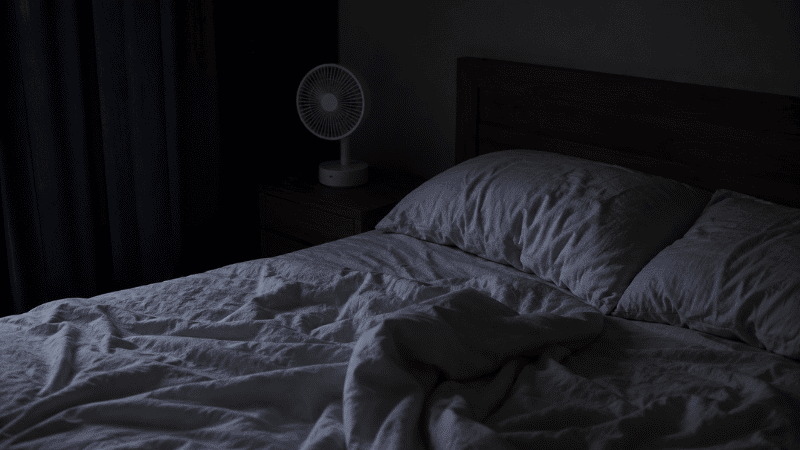
Hormonal changes — perimenopause and menopause Estrogen decline during perimenopause and menopause dysregulates the brain’s thermostat, producing hot flashes and night sweats that directly disrupt sleep at the most vulnerable points in the sleep cycle. Many perimenopausal women find that they sleep well in the first half of the night and then wake repeatedly in the second half — a pattern consistent with vasomotor symptoms amplifying the natural arousal that occurs during REM-dominant late sleep. Temperature management (cool bedroom, breathable bedding, fan) is the most immediately effective environmental intervention.
Nocturia — the need to urinate Frequent nighttime urination is one of the most common causes of waking in adults over 50, but it affects younger adults too. For many people, the problem is primarily behavioral — drinking too much fluid in the late afternoon and evening. The fix is straightforward: front-load fluid intake earlier in the day and reduce consumption in the two hours before bed. Persistent nocturia that doesn’t respond to timing adjustments can signal underlying conditions including bladder dysfunction, diabetes, or cardiovascular changes, and warrants a conversation with a healthcare provider.
Environmental Causes
Bedroom temperature too warm Temperature is the most underestimated environmental cause of nighttime waking. Deep sleep requires the body to maintain a small but significant drop in core temperature. A bedroom that’s too warm prevents this and keeps sleep in lighter stages, increasing sensitivity to arousal during the vulnerable second half of the night.
The research-supported optimal range is 65–68°F (18–20°C). Most people’s bedrooms are warmer than this, particularly in summer or in homes with central heating. Cooling the bedroom, switching to breathable bedding, and keeping feet uncovered are the most effective and lowest-effort adjustments available.
Light exposure Even dim light during the night — from a streetlight through thin curtains, a charging device, a standby indicator, or a digital clock — can shift sleep toward lighter stages and lower the waking threshold. The effect is subtle but consistent, and it compounds with the natural lightening of sleep in the second half of the night. Blackout curtains or a sleep mask are the direct remedies. Removing or covering light-emitting devices in the bedroom removes a background disruption that many people don’t realize is affecting them.
Noise Variable sounds — a car, a partner’s movement, a notification — are more disruptive than consistent background noise because the brain habituates to predictable stimulation but responds to change. White noise or pink noise creates a consistent auditory background that masks variable intrusions. Research on pink noise specifically suggests it may also enhance slow-wave sleep activity, not merely mask sound.
A partner’s movement or snoring Bed-sharing partners who move, snore, or have different temperature preferences are a frequently underestimated cause of nighttime waking. If this is a contributing factor, addressing it directly — through separate bedding systems, earplugs, or a sleep position evaluation — is more effective than trying to work around it with sleep hygiene changes alone.
Behavioral and Lifestyle Causes
Alcohol timing Alcohol is the most common self-administered cause of middle-of-the-night waking, and the least recognized because it reliably helps with sleep onset. The mechanism: alcohol metabolizes into acetaldehyde, a stimulating compound, roughly 4–5 hours after consumption. For someone who drinks at 9 or 10pm, this metabolite peaks at 2–3am — exactly when sleep architecture is most fragile.
Even moderate drinking within three hours of sleep measurably fragments the second half of the night for most adults. Moving the last drink to at least three hours before sleep, or testing a week without evening alcohol and tracking nighttime waking, gives a clear picture of whether alcohol is a significant driver.
Caffeine timing Caffeine’s half-life is approximately 5–6 hours. A 3pm coffee has half its caffeine active at 8–9pm. For caffeine-sensitive individuals, this residual can reduce deep sleep quality and lower the arousal threshold in the second half of the night — not necessarily preventing sleep onset, but increasing waking fragmentation. Moving caffeine intake before noon is a clean test for those who wake repeatedly.
Irregular sleep schedule Circadian rhythm stability depends on consistent timing. When wake times vary by more than 30–60 minutes across days — sleeping in on weekends, staying up late sporadically — the circadian system becomes less precise, and sleep becomes shallower and more fragmented throughout the week. A consistent anchor wake time, held within 30 minutes every day including weekends, stabilizes the circadian system and reduces nighttime waking over 1–2 weeks of practice.
Late or large meals Eating a heavy meal within 2–3 hours of sleep elevates core body temperature through digestion, increases the likelihood of acid reflux, and can trigger blood sugar fluctuations. Any of these can contribute to nighttime waking. Finishing the last substantial meal earlier in the evening, or keeping late snacks small and balanced, reduces this contribution.
Daytime napping Napping, particularly late in the day or for longer than 20–30 minutes, reduces sleep pressure (the accumulating drive to sleep) before the main sleep period. Less sleep pressure means lighter, more fragmented sleep and increased nighttime waking. For people who struggle with nighttime waking, eliminating or strictly limiting naps is often one of the most effective behavioral adjustments.
Medical and Psychological Causes
Sleep apnea Obstructive sleep apnea causes repeated partial or complete airway collapse during sleep, producing micro-arousals that the sleeper often doesn’t remember but which completely fragment sleep continuity. Many people with sleep apnea don’t know they have it — they don’t recall waking, they just feel chronically unrested. Signs include loud snoring, waking with headaches, dry mouth, gasping, or excessive daytime sleepiness despite adequate time in bed.
Sleep apnea is particularly active during REM sleep, which is concentrated in the second half of the night. This is why it frequently presents as middle-of-the-night or early morning waking — the sleeper wakes from apnea events in the most REM-dense part of the night without understanding the connection. Sleep apnea is both extremely common and very treatable; CPAP therapy and positional interventions both have strong evidence.
Restless legs syndrome (RLS) and periodic limb movement disorder (PLMD) RLS produces uncomfortable sensations in the legs at rest — often described as crawling, aching, or an irresistible urge to move — that are worst in the evening and night. PLMD involves involuntary limb movements during sleep, which the sleeper may not consciously register but which disrupt sleep continuity. Both conditions are more common in women, during pregnancy, and with iron or folate deficiency. Both respond to specific medical treatments and are frequently underdiagnosed.
Anxiety and depression Anxiety produces nighttime waking through cortisol and hypervigilance — the nervous system stays partially alert even during sleep, and any arousal signal becomes a full waking. Depression is particularly associated with early morning waking (4–6am) that the person cannot return to sleep from, often accompanied by low mood, rumination, and reduced motivation on waking.
Both conditions interact bidirectionally with sleep — poor sleep worsens anxiety and depression, and anxiety and depression worsen sleep. This means addressing the sleep alone is often insufficient; the mood difficulty needs direct attention through therapy, medication, or both.
Gastroesophageal reflux (GERD) Acid reflux is worse lying down because gravity no longer prevents stomach acid from moving upward. It can produce waking with burning discomfort, a sour taste, or coughing — often without the person immediately recognizing the cause as digestive. Elevating the head of the bed (using risers under the mattress, not just a pillow under the head), avoiding eating within 2–3 hours of sleep, and left-side sleeping (which keeps the stomach below the esophagus) all reduce reflux-related waking. Persistent GERD warrants provider evaluation.
Medications Several common medications list insomnia or nighttime waking as side effects, including certain antidepressants (particularly SSRIs and SNRIs), beta-blockers, corticosteroids, decongestants, and stimulants. If waking began around the time of a medication change, mention it to your prescriber — alternatives are often available, or timing adjustments can help.
Chronic pain Pain that is tolerable during the day can become the primary awareness during the quiet and stillness of the night, producing waking that the person may not immediately connect to the pain. Position adjustments, appropriate pain management, and anti-inflammatory approaches before bed are relevant here depending on the source.
What to Do When You Wake in the Middle of the Night

First: give yourself 15–20 minutes
Most nighttime wakings are brief and self-resolving. When you wake, stay still, keep your eyes closed, and allow 15–20 minutes for natural return to sleep. Don’t check the time. Don’t reach for your phone. Many people return to sleep during this window without any intervention.
If you’re still awake: get out of bed
This is the most counter-intuitive and most evidence-supported response to middle-of-the-night waking. It is the behavioral core of stimulus control therapy — the component of CBT-I with the strongest evidence base for sleep maintenance insomnia.
The mechanism: when you lie awake in bed — anxious, watching the ceiling, checking the time — you are training your brain to associate the bed with wakefulness and frustration rather than sleep. This conditioned association develops quickly and is remarkably persistent. Once established, getting into bed can itself trigger arousal. Getting up breaks this training and protects the bed as a sleep-only space.
What to do when you get up:
- Go somewhere dim and quiet — not bright, not stimulating
- Do something genuinely low-stimulation: read something unengaging, sit with a warm non-caffeinated drink, practice slow extended-exhale breathing
- Write down whatever is circling in your mind — not to solve it, just to move it from active memory to paper
- Do not turn on bright lights, do not check your phone or social media, do not start solving problems
Return to bed when you feel genuinely drowsy — eyes heavy, thoughts softening. Repeat as many times as needed throughout the night.
Never watch the clock
Clock-watching after waking is one of the most consistently documented behaviors that prolongs waking episodes. Seeing the time triggers a sequence: calculating remaining sleep, frustration about the waking, anticipatory anxiety about tomorrow’s tiredness. Each of these elevates cortisol and makes return to sleep harder.
Turn the clock away from the bed. Remove it from the room if possible. Put your phone where you can’t reach it without getting up. The time is genuinely not useful information at 3am.
Breathing to return to sleep
The extended exhale is the fastest available tool for returning the nervous system to parasympathetic dominance after waking. When the exhale is longer than the inhale, it directly stimulates the vagus nerve and lowers heart rate — often within 90 seconds.
The 4-7-8 method: exhale completely, inhale through the nose for 4 counts, hold for 7 counts, exhale completely through the mouth for 8 counts. Repeat 3–4 cycles. For those who find the hold uncomfortable, a simpler version — in for 4, out for 6 or 8 — uses the same mechanism.
Building Long-Term Habits That Prevent Nighttime Waking
The in-the-moment tools above help when waking happens. The habits below reduce how often it happens.
Fix the bedroom environment: Temperature 65–68°F, blackout curtains or sleep mask, consistent background sound (fan or pink noise), phone and light-emitting devices removed or covered.
Anchor the wake time: Same time every morning within 30 minutes, including weekends. This is the most powerful single behavioral intervention for sleep continuity.
Move alcohol earlier: Last drink at least three hours before sleep. Track nighttime waking before and after to see the effect.
Caffeine before noon: Test for two weeks for those with persistent fragmented sleep.
Address stress during the day: Physical movement, a workday shutdown ritual, structured worry time — these modulate the cortisol curve that produces early-morning waking more effectively than any bedtime intervention.
Protect sleep pressure: Limit or eliminate naps. Avoid excessive time in bed. Sleep pressure — the accumulating drive to sleep — is the most fundamental driver of sleep continuity.
Waking Up in the Middle of the Night by Person Type

Stressed professionals and working adults
Primary driver is almost always cortisol — daytime stress not discharged before sleep. Focus: physical movement during the day, deliberate workday shutdown, structured worry time (15 minutes in the early evening), and morning light to anchor the circadian rhythm. The 20-minute rule and breathing techniques address the waking when it happens.
New parents
Standard advice doesn’t apply to structurally broken nights. Focus instead: maximize sleep onset speed through a brief consistent pre-sleep ritual, use red-spectrum night lights during feeds (which preserve melatonin), and release the expectation of consolidated sleep until the baby’s sleep architecture develops.
Perimenopausal and menopausal women
Temperature management is the primary lever. Cool bedroom (65°F or below), breathable linen or bamboo bedding, a fan directed across the bed. For vasomotor-driven waking that doesn’t respond to environmental management, a conversation with a menopause-informed provider about hormonal and non-hormonal treatment options is appropriate.
Older adults
Sleep architecture naturally lightens with age, making environment and timing especially important. Consistent wake time, morning light, cool bedroom, and addressing any medical causes (nocturia, pain, sleep apnea) all become more impactful as the inherent depth of sleep decreases.
People with anxiety
The nervous system doesn’t fully disengage during sleep, and any natural arousal can activate the worry system and produce a full waking. Getting out of bed and using the written brain dump are particularly effective for anxiety-driven waking. If anxiety is significantly present during the day, direct therapeutic support addresses the root more effectively than sleep-specific interventions alone.
When Waking Up at Night Requires Medical Attention
Seek evaluation from a healthcare provider if:
- Nighttime waking has persisted for more than three months and is affecting your daytime function — concentration, mood, energy, safety
- You or a partner notice loud snoring, gasping, or pauses in breathing during sleep — these are the primary indicators of sleep apnea
- You wake with headaches, dry mouth, or a feeling of having not slept despite adequate time in bed
- You experience uncomfortable sensations in your legs at night with an urge to move — possible restless legs syndrome
- Nighttime waking is accompanied by significant anxiety or low mood that is present during the day
- Waking is accompanied by heartburn or digestive discomfort
- You suspect a medication may be contributing
CBT-I is the first-line, most evidence-based treatment for sleep maintenance insomnia — more effective than sleep medication in long-term outcomes and specifically designed for the patterns described throughout this guide. A referral from your doctor or a validated digital CBT-I program are both accessible options.
Frequently Asked Questions
Why do I keep waking up in the middle of the night for no reason?
There is almost always a reason — it’s just not always immediately visible. The most common causes that feel “reason-free” are: alcohol metabolizing 4–5 hours after consumption, cortisol rising earlier than normal due to chronic stress, blood sugar fluctuations triggering alerting hormones, and conditioned arousal — where the brain has learned to wake at a particular time regardless of other triggers. A two-week sleep diary tracking wake time, alcohol use, meal timing, and stress level usually reveals a pattern.
Is waking up in the middle of the night a sign of anxiety?
It can be. Anxiety keeps the nervous system in a state of partial alertness even during sleep, making the natural transitions between sleep cycles more likely to produce full waking. The characteristic signature is waking with a mind that’s immediately active — thoughts arriving quickly, often anxious content. If anxiety is present during the day as well as at night, addressing it directly through therapy or medical support typically produces more sleep improvement than sleep-specific interventions alone.
How do I fall back asleep after waking up at night?
Give yourself 15–20 minutes to drift back naturally — eyes closed, body still, no clock. If that doesn’t work, get out of bed rather than lying awake. Go somewhere dim and quiet, do something low-stimulation, use slow extended-exhale breathing, write down whatever is circling in your mind. Return to bed when genuinely drowsy. Avoid checking the time, turning on bright lights, or reaching for your phone.
What causes waking up between 2am and 4am specifically?
Several biological events converge in this window. Sleep architecture shifts toward lighter REM-dominant stages in the second half of the night, making the transition points more likely to produce full waking. Cortisol begins its morning rise — earlier than normal in chronically stressed individuals. Alcohol metabolizes to its stimulating byproduct approximately 4–5 hours after consumption. Blood sugar can drop if the last meal was early or high-glycemic. Hot flashes in perimenopausal women are concentrated in REM sleep. Any one of these, or several in combination, produce the characteristic 2–4am waking pattern.
Can waking up at night every night be serious?
Waking occasionally and returning to sleep quickly is not medically concerning. When waking occurs most nights, return to sleep takes more than 20–30 minutes, and daytime function is affected — this meets the definition of sleep maintenance insomnia, which is a clinical condition worth addressing. If waking is accompanied by snoring, gasping, morning headaches, or persistent daytime sleepiness, sleep apnea should be evaluated. Both conditions are treatable.
Does melatonin help with waking in the middle of the night?
Melatonin primarily regulates sleep timing — signaling that darkness has arrived — rather than maintaining sleep continuity. It can help with sleep onset for circadian timing issues, but it doesn’t address the mechanisms that cause middle-of-the-night waking. The environmental, behavioral, and stress management approaches in this guide are more directly relevant for sleep maintenance specifically.
What is sleep maintenance insomnia?
Sleep maintenance insomnia is the clinical term for the pattern of waking in the middle of the night and being unable to return to sleep. It is distinguished from sleep onset insomnia (difficulty falling asleep initially) and early morning awakening insomnia (waking 1–2 hours before the intended wake time). An estimated 1 in 5 people with insomnia has the sleep maintenance type. CBT-I is the most effective evidence-based treatment.
The Bottom Line
Waking up in the middle of the night is common, frustrating, and — for most people — fixable. The causes are varied, but they fall into identifiable categories: environmental factors you can change tonight, behavioral factors that build up over days and weeks, biological rhythms you can work with rather than against, and medical causes that deserve proper evaluation.
Start by addressing the most likely contributor for your situation. If you drink in the evenings, test moving it earlier. If your bedroom is warm, cool it down. If your wake time varies, fix it. If stress is the driver, the work is during the day, not at bedtime. Apply the 20-minute rule and the clock-away approach when waking happens.
Give each change two weeks before adding the next. Sleep responds to consistency more than to any single intervention — and most causes of nighttime waking respond well when the right lever is pulled with enough consistency.
For the complete guide to sleeping through the night without interruption — including the full set of behavioral strategies and what to do when nothing seems to work — read our pillar guide on how to sleep through the night. If your waking happens at a specific time every night, our guide on why you keep waking up at 3am explains the conditioned arousal pattern in detail. And for the anxiety-specific version of this problem, how to sleep with anxiety addresses the neurobiological loop directly.
References
- Ohayon, M. M., & Roth, T. (2003). Place of chronic insomnia in the course of depressive and anxiety disorders. Journal of Psychiatric Research, 37(1), 9–15.
- Thakkar, M. M., Sharma, R., & Sahota, P. (2015). Alcohol disrupts sleep homeostasis. Alcohol, 49(4), 299–310.
- Okamoto-Mizuno, K., & Mizuno, K. (2012). Effects of thermal environment on sleep and circadian rhythm. Journal of Physiological Anthropology, 31(1), 14.
- Morin, C. M., & Benca, R. (2012). Chronic insomnia. The Lancet, 379(9821), 1129–1141.
- Centers for Disease Control and Prevention. (2024). Sleep and sleep disorders. https://www.cdc.gov/sleep
- Papalambros, N. A., Santostasi, G., Malkani, R. G., Braun, R., Weintraub, S., Zee, P. C., & Paller, K. A. (2017). Acoustic enhancement of sleep slow oscillations and concomitant memory improvement in older adults. Frontiers in Human Neuroscience, 11, 109.
NourishDAO publishes sleep and wellness content for informational purposes only. This article is not a substitute for professional medical advice, diagnosis, or treatment. If you have persistent sleep difficulties, please consult a qualified healthcare provider.