
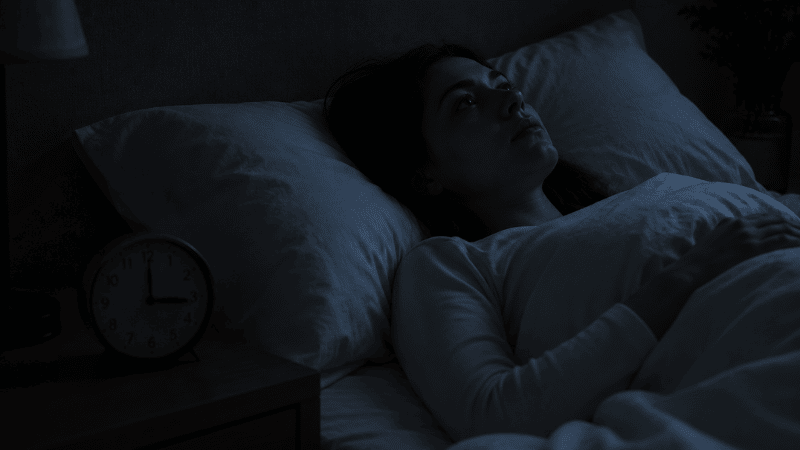
It’s not just that you wake up at 3am. It’s that you wake up at 3am again. Night after night, with an almost mechanical precision that would be impressive if it weren’t so exhausting. You’ve started to dread it. You’ve started watching the clock before you fall asleep, wondering if tonight will be different. And when 3:02am arrives and your eyes open like they’ve been set on a timer, there’s a particular kind of despair in realizing it’s happening again.
This is a different problem from the occasional middle-of-the-night waking that most adults experience. This is a pattern — and patterns have causes that are specific, identifiable, and in most cases, fixable.
If you keep waking up at 3am every night, or close to it, with a consistency that feels almost personal, this guide is for you. We’ll explain exactly why the pattern develops, what’s maintaining it, why some people break out of it quickly and others don’t, and what actually changes the cycle — not just tonight, but for good.
Key Takeaways
- Repeated waking at the same time every night is usually caused by a combination of a biological trigger (cortisol, blood sugar, alcohol metabolism) and a learned behavioral pattern — your brain has been conditioned to wake at this time and now does so partly on its own.
- More than 35% of adults wake in the middle of the night at least three times per week, according to research published in Sleep, but far fewer experience it with the consistent timing that signals a conditioned response.
- Addressing the biological trigger alone is often not enough — the conditioned arousal pattern typically needs to be broken simultaneously.
- The most evidence-based behavioral treatment for this pattern is CBT-I (Cognitive Behavioral Therapy for Insomnia), which specifically targets both the physiological and learned components of repeated nighttime waking.
- The NIH classifies sleep difficulty lasting more than three months with significant daytime consequences as chronic insomnia — a condition that responds well to targeted treatment but often doesn’t resolve with general sleep hygiene changes alone.
Why You Wake Up at the Same Time Every Night: The Two-Layer Problem

Most guides on 3am waking focus on the biological causes — cortisol, blood sugar, alcohol, anxiety. These are real and important. But they explain why you wake at 3am; they don’t fully explain why you keep waking at 3am with the same precision night after night.
The answer involves two overlapping layers that work together to create and sustain the pattern.
Layer 1: The biological trigger
At roughly 3am, several physiological events converge:
Your cortisol — which follows a circadian rhythm — begins its morning rise around 2–3am to prepare your body for waking. Under normal conditions, this rise is gentle and doesn’t fully rouse you. But when cortisol levels are chronically elevated from stress, this rise is more pronounced and more likely to break through into consciousness.
Your sleep architecture shifts at this point. The first half of the night is dominated by deep slow-wave sleep; the second half increasingly by lighter REM sleep. REM sleep is the stage most vulnerable to disruption — by light, noise, temperature changes, internal hormonal signals, and anxiety. By 3am, you’ve moved decisively into this lighter territory.
Alcohol metabolism peaks roughly 4–5 hours after your last drink — putting the metabolite surge squarely in the 2–3am window for someone who drank at 9 or 10pm. This is one of the most common and least recognized causes of the precise 3am waking pattern.
Blood sugar fluctuations can also trigger waking at this time. If your last meal was early or high in refined carbohydrates, blood glucose may drop enough in the early hours to trigger a cortisol and adrenaline response — a physiological alarm that wakes you to eat.
Any one of these triggers can produce a 3am waking. Combined with heightened stress or anxiety, they produce it reliably.
Layer 2: The conditioned response — why the pattern becomes self-sustaining
Here’s what most articles don’t explain: once you’ve woken at 3am several nights in a row, your brain begins to anticipate it.
Your brain is a pattern-recognition machine of remarkable sophistication. When an event occurs consistently at the same time — especially one associated with a stress response — your nervous system begins to prepare for it. Cortisol begins rising slightly earlier. Arousal thresholds lower in the hour before the anticipated waking. The brain, essentially, starts setting an internal alarm.
This is called conditioned arousal, and it’s the reason why people who address the original trigger (stop drinking alcohol, manage their stress, adjust their meal timing) sometimes still wake at 3am for weeks afterward. The learned component of the pattern persists after the biological one has been addressed.
It’s also the reason why lying awake after 3am waking and watching the clock — feeling increasingly anxious about not sleeping — makes the pattern worse, not better. Each anxious 3am episode reinforces the association between that time and heightened arousal, deepening the conditioned response.
Understanding this two-layer structure is essential because it determines how to break the pattern. Biological triggers and conditioned responses require different interventions.
The Most Common Biological Triggers — And How to Address Each One

Chronic stress and cortisol dysregulation
This is the most prevalent cause of the recurring 3am pattern, particularly among working adults, parents, and anyone going through a high-demand or emotionally difficult period. Chronic stress dysregulates the hypothalamic-pituitary-adrenal (HPA) axis, causing cortisol to be elevated more broadly — including in the early morning hours when it should be rising gently rather than surging.
The characteristic pattern: Waking with a mind that’s immediately and fully active. Thoughts arrive quickly — replaying the previous day, planning tomorrow, circling worries. The waking doesn’t feel groggy; it feels alert in an unwelcome way.
What addresses it: Bedtime interventions matter less than daytime ones. The cortisol curve that produces 3am waking is set during the day. Physical movement (which is one of the most efficient cortisol regulators available), deliberate breaks from cognitive load throughout the day, and a written shutdown ritual at the end of the workday all reduce the evening cortisol level and flatten the early-morning rise.
A specific tool worth noting: research from Baylor University found that writing a “to-do list” for the next day before bed — as opposed to journaling about the current day — reduced the time taken to fall asleep and decreased nighttime waking by externalizing the task-tracking burden the brain otherwise maintains through the night.
Alcohol timing
If you drink alcohol and wake repeatedly at 3am, this is the first thing to test — because the connection is direct, consistent, and eliminates with a simple timing adjustment.
The characteristic pattern: You fall asleep easily. The first half of the night feels fine. Then you wake at roughly the same time each night, often feeling slightly warm or restless, with mild anxiety and difficulty returning to sleep.
What addresses it: Move your last drink to at least three hours before sleep. For most people who drink in the evening, this means finishing by 7 or 8pm rather than 9 or 10pm. Two weeks of this change produces a clear signal about whether alcohol timing was the primary trigger.
Blood sugar fluctuations
This trigger is most common in people who eat dinner early (before 6pm), skip dinner, eat a high-glycemic meal in the evening, or have conditions affecting glucose regulation including pre-diabetes, type 2 diabetes, or insulin resistance.
The characteristic pattern: Waking feeling vaguely anxious or physically restless, possibly with a sense of hunger or slight shakiness. Often accompanied by difficulty returning to sleep that feels more physical than mental.
What addresses it: A small, balanced pre-sleep snack (protein plus complex carbohydrate) can stabilize overnight blood glucose. Options that work well: a small handful of almonds with a few whole-grain crackers, half a banana with a teaspoon of nut butter, or a small portion of Greek yogurt. The goal is slow-release energy that bridges the overnight fasting window without raising blood sugar high enough to cause a reactive dip.
Anxiety and rumination
Anxiety creates a specific kind of 3am waking: you emerge from sleep into a mind that’s already generating content — worries, fears, worst-case scenarios — with unusual speed and vividness. The silence and darkness of 3am remove the distractions that usually interrupt anxious thought during the day, and the result is rumination that can feel impossible to stop.
The characteristic pattern: Waking that immediately becomes thinking. Topics tend to be consistent across nights — the same worries, the same scenarios. Often accompanied by slight physical tension or a mildly elevated heart rate.
What addresses it: The immediate response matters: don’t lie in bed trying to suppress the thoughts. Get up after 15–20 minutes, go somewhere dim and quiet, and write down whatever is circling. The goal isn’t to solve the worries but to move them from active working memory to paper — which gives the brain partial permission to release them. Return to bed when genuinely drowsy.
For recurring anxiety-driven waking, the underlying anxiety needs to be addressed during the day — not just managed at 3am. Structured worry time (a deliberate 15-minute period in the early evening for writing down concerns and possible next steps) has research support for reducing nighttime rumination.
Environmental factors that reliably trigger the same waking time
If your bedroom is exposed to a consistent external stimulus at the same time each night — a car that passes, a neighbor’s alarm, a shift change at a nearby facility, the heating system cycling on — your brain will eventually begin to rouse in anticipation of it, even on nights when the stimulus doesn’t occur or isn’t loud enough to be consciously noticed.
The characteristic pattern: Very consistent timing, often to the minute. Waking without obvious mental content — it’s not thoughts that woke you, it’s just that you’re awake. May correlate with sounds or light changes you’ve gradually stopped noticing consciously.
What addresses it: A week of tracking the waking time versus any external factors (traffic patterns, building heating schedules, a partner’s schedule) often reveals the connection. White noise or pink noise played through the night masks variable external sounds and is particularly effective for this type of conditioned environmental waking.
Breaking the Conditioned Arousal Pattern
Once the biological trigger is identified and addressed, the conditioned component of the pattern often needs direct intervention. Here’s what works.

The 15-minute rule — consistently applied
If you’re awake at 3am and haven’t returned to sleep within 15–20 minutes, get out of bed. Do something genuinely calm and low-stimulation in a dimly lit space. Return to bed when you feel drowsy.
This is the behavioral core of stimulus control therapy — one of the most effective components of CBT-I. Its purpose is to break the association between your bed and wakefulness, and to stop reinforcing the association between 3am and anxious alertness. Applied consistently for 2–3 weeks, it produces meaningful improvement in the conditioned component of repeated waking, even when the biological trigger has been controlled.
The discomfort of getting up at 3am is real. The discipline required is real. But lying in bed anxiously for an hour — which feels like the easier option — actively deepens the conditioned arousal pattern and makes subsequent nights harder.
Stop clock-watching
Looking at the time after waking is one of the most common and most counterproductive responses to 3am waking. Knowing it’s 3am activates a sequence: calculation of remaining sleep time, frustration about the waking, anticipatory anxiety about tomorrow’s tiredness. All of this generates the cortisol and adrenaline that make returning to sleep harder.
Turn your clock away from the bed. Put your phone out of reach. The time is not useful information at 3am.
Anchor your wake time regardless of the night before
A consistent morning wake time is the most powerful circadian anchor available — and it directly affects the pattern of nighttime waking. When wake times vary (sleeping in after bad nights), the circadian system becomes less predictable, and 3am waking becomes more likely and harder to recover from.
Getting up at the same time every morning, even after a genuinely difficult night, builds the sleep pressure that makes the following night easier and gradually restructures the sleep architecture away from the pattern that produces consistent 3am waking.
When the Pattern Has Been Going On for a While
If you’ve been waking at 3am every night for more than a few weeks and behavioral adjustments haven’t resolved it, the conditioned component of the pattern has likely become sufficiently entrenched that it needs structured treatment rather than general habit changes.
Cognitive Behavioral Therapy for Insomnia (CBT-I) is the most evidence-based treatment available for exactly this pattern. It addresses both the conditioned arousal and any cognitive patterns (catastrophizing about sleep, clock-watching, safety behaviors that inadvertently reinforce insomnia) that maintain nighttime waking. Multiple randomized controlled trials show CBT-I outperforms sleep medication in long-term outcomes for chronic insomnia, with effects that persist after treatment ends.
CBT-I is available through sleep psychologists, and increasingly through digital platforms and apps. Ask your doctor for a referral if the pattern has persisted beyond three months.
What to Do Right Now If You’re Reading This at 3am
First: put the phone down after this, not back on social media or news.
If you’ve been awake for more than 20 minutes: get up. Go somewhere dim. Make a warm drink. Write down whatever is in your head — not to solve it, just to move it out. Breathe slowly with a longer exhale than inhale (four counts in, six or eight counts out). Return to bed when your eyes feel heavy.
If you just woke and it’s been less than 15 minutes: stay still, eyes closed, breathing slow. Don’t check the time. Don’t reach for your phone. Give your body the chance to drift back before taking any action.
Either way: don’t try to force sleep. Trying to sleep produces the opposite of sleep. The goal is creating the conditions for it — quiet body, undemanding mind, dark room — and then releasing control of whether it happens.
When to Seek Professional Help
Talk to a doctor or sleep specialist if:
- You’ve been waking at 3am most nights for more than three months
- The waking is causing significant daytime impairment: fatigue, difficulty concentrating, mood changes, or safety concerns
- You or a partner notice snoring, gasping, or pauses in breathing during sleep — possible signs of sleep apnea, which is both very common and very treatable
- Restless or uncomfortable leg sensations at night create an urge to move — these may indicate restless legs syndrome
- The waking is accompanied by significant anxiety or depression that is present during the day as well
Chronic insomnia that doesn’t respond to behavioral self-management often has a specific, treatable cause. A sleep specialist can help identify it.
Frequently Asked Questions

Why do I wake up at exactly 3am every night?
The precision of the timing usually reflects a conditioned response. Once your brain has experienced waking at a particular time several nights in a row — whether from cortisol, alcohol metabolism, blood sugar, or another trigger — it begins to anticipate that waking and primes the arousal system in advance. Over time, the waking becomes partially self-generated, even if the original biological trigger is reduced. This is conditioned arousal, and it explains why treating the trigger alone doesn’t always stop the pattern immediately.
Why do I keep waking up at 3am for no reason?
There’s almost always a reason — it may just not be immediately obvious. The most commonly missed causes are alcohol timing (even moderate evening drinking), blood sugar fluctuations from early dinners or high-glycemic evening meals, environmental triggers that have become invisible through habituation, and conditioned arousal from a previously identified trigger that has since been resolved. A sleep diary tracking wake time, alcohol consumption, meal timing, and daytime stress for two weeks often reveals the pattern.
Is waking up at 3am a sign of anxiety?
It can be, and anxiety is one of the most common causes of the recurring 3am pattern specifically because it tends to produce a characteristic type of waking: immediate, full arousal with rapid thought generation. The silence of 3am removes the distractions that interrupt anxious thinking during the day, and the result is often the most intense rumination of the 24-hour cycle. If this describes your experience, addressing the anxiety directly — not just at 3am but throughout the day — is the most effective intervention.
Can waking up at 3am every night be harmful?
The waking itself is not directly harmful. What creates health risk is the cumulative sleep deprivation that results from being unable to return to sleep, and the secondary effects of chronic sleep disruption on mood, cognitive function, immune health, and metabolic regulation. If nightly 3am waking is significantly reducing your total sleep and affecting your daytime function, it deserves attention as a health matter — not just an inconvenience.
Why do I wake up at 3am when I’m stressed?
Stress chronically elevates cortisol levels. Cortisol follows a circadian curve that begins rising in the early morning hours to prepare the body for waking. When baseline cortisol is already elevated from ongoing stress, this early-morning rise reaches a higher peak and does so more abruptly — enough to break through into consciousness at 2 or 3am. This is the physiological mechanism behind the classic “wide awake at 3am, mind immediately racing” experience that so many stressed or anxious people describe.
How do I break the cycle of waking up at 3am?
Address the biological trigger first: identify and modify the most likely cause (alcohol timing, stress levels, meal timing, bedroom environment). Simultaneously begin the behavioral component: the 15-minute rule, no clock-watching, consistent morning wake time regardless of the previous night. Give this approach two to three weeks of consistent application. If the pattern continues beyond that or has already persisted for months, CBT-I — either through a therapist or a validated digital program — is the most evidence-based next step.
The Pattern Can Be Broken
Waking at 3am every night is not your body malfunctioning. It’s your body following a pattern it has learned — often very well, and over a long period of time.
Patterns that have been learned can be unlearned. But they take consistent, patient effort across both the biological and behavioral layers simultaneously. A single good night doesn’t break a conditioned response. Two weeks of consistent application usually does.
Start with the most likely biological trigger for your situation. Add the behavioral component — the 15-minute rule, the morning anchor, the clock turned away. Give it time.
The 3am that feels like a personal adversary right now can become just another hour of the night — one you sleep through without noticing.
For a broader understanding of what’s happening during middle-of-the-night waking, read our full guide on waking up at 3am: causes and what to do. If deep sleep quality is the underlying concern, our guide on how to get more deep sleep covers the mechanisms and habits that protect it.
References
- Ohayon, M. M., & Roth, T. (2003). Place of chronic insomnia in the course of depressive and anxiety disorders. Journal of Psychiatric Research, 37(1), 9–15.
- Buckley, T. M., & Schatzberg, A. F. (2005). On the interactions of the hypothalamic-pituitary-adrenal (HPA) axis and sleep: Normal HPA axis activity and circadian rhythm, exemplary sleep disorders. Journal of Clinical Endocrinology & Metabolism, 90(5), 3106–3114.
- Thakkar, M. M., Sharma, R., & Sahota, P. (2015). Alcohol disrupts sleep homeostasis. Alcohol, 49(4), 299–310.
- Scullin, M. K., Krueger, M. L., Ballard, H. K., Pruett, N., & Bliwise, D. L. (2018). The effects of bedtime writing on difficulty falling asleep: A polysomnographic study comparing to-do lists and completed activity lists. Journal of Experimental Psychology: General, 147(1), 139–146.
- National Institutes of Health, National Institute of Neurological Disorders and Stroke. (2023). Brain basics: Understanding sleep. https://www.ninds.nih.gov/health-information/public-education/brain-basics/brain-basics-understanding-sleep
NourishDAO publishes sleep and wellness content for informational purposes only. This article is not a substitute for professional medical advice, diagnosis, or treatment. If you have persistent sleep difficulties, please consult a qualified healthcare provider.