
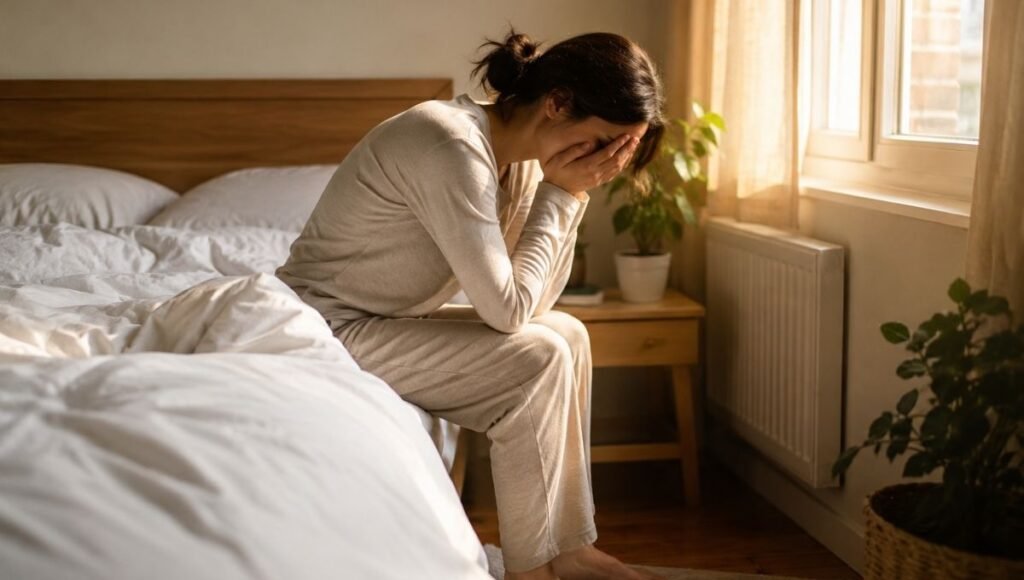
You slept eight hours. You know you slept eight hours because you checked the clock when you went to bed and again when you woke up. And yet here you are, dragging yourself through the morning, feeling like you barely rested at all.
This is one of the most confusing and frustrating experiences in the sleep world — spending enough time in bed, doing everything right on paper, and still waking up feeling empty. Most of the time, the culprit isn’t how many hours you slept. It’s how much of that time was actually deep sleep.
Deep sleep — technically called slow-wave sleep or N3 — is the most physically restorative stage of the sleep cycle. It’s when your body repairs tissue, releases growth hormone, consolidates memories, clears metabolic waste from the brain, and rebuilds immune defenses. Without enough of it, the rest of the hours you spend in bed don’t fully compensate. You can sleep nine hours and still feel unrested if your deep sleep percentage is low.
This guide covers how much deep sleep you actually need, how to tell if you’re not getting enough, why it decreases (especially with age, stress, and alcohol), and what specifically helps protect and increase it.
Key Takeaways
- Adults need approximately 13–23% of total sleep time in deep sleep, which equals roughly 1.5–2 hours for someone sleeping 7–8 hours — but this decreases with age.
- Deep sleep (N3 / slow-wave sleep) is the most physically restorative stage of sleep: it’s when growth hormone is released, tissue repair occurs, immune function is most active, and the brain clears amyloid beta — the protein associated with Alzheimer’s disease.
- Alcohol is one of the most potent suppressors of deep sleep even in moderate amounts, reducing slow-wave sleep even when total sleep time appears adequate.
- The first two sleep cycles (occurring in the first 3–4 hours of the night) contain the majority of deep sleep. Staying up late or waking early disproportionately cuts into this window.
- According to the CDC, 1 in 3 American adults regularly sleep fewer than 7 hours — a threshold below which deep sleep becomes structurally inadequate regardless of other interventions.
What Is Deep Sleep and What Does It Actually Do?
Sleep moves through cycles of approximately 90 minutes, and each cycle contains different stages with different functions. The stages are N1 (light sleep, the transition), N2 (consolidated sleep, most of the night), N3 (deep slow-wave sleep), and REM (rapid eye movement, associated with dreaming and emotional processing).
Deep sleep — N3 — is concentrated in the first half of the night. The first two cycles of the night contain the most slow-wave sleep; as the night progresses, later cycles contain more REM and less deep sleep. This is why the first few hours of sleep are disproportionately important for physical restoration.
Here’s what specifically happens during deep sleep that doesn’t happen in the same way during other stages:
Physical repair. Human growth hormone is released almost exclusively during slow-wave sleep. This hormone governs tissue repair, muscle synthesis, and cellular regeneration. Athletes who don’t get enough deep sleep recover slower from training — not because they slept fewer hours, but because the stage in which repair occurs was insufficient.
Immune function. Research from the University of Tübingen found that deep sleep enhances the immune system’s ability to form long-term immunological memories — the mechanism by which vaccines work and by which the body learns to recognize and fight pathogens it has previously encountered. Poor deep sleep doesn’t just make you more susceptible to colds; it may reduce the effectiveness of vaccines.
Brain waste clearance. The glymphatic system — the brain’s waste clearance network — is most active during slow-wave sleep. It uses cerebrospinal fluid to flush metabolic byproducts from brain tissue, including amyloid beta and tau proteins associated with Alzheimer’s disease. Research published in Science found that the glymphatic system is nearly 10 times more active during sleep than during waking — and most active during deep sleep specifically.

Memory consolidation. Procedural and declarative memories (how to do things, and facts and events) are consolidated during slow-wave sleep through a process called memory replay, in which the hippocampus transfers information to long-term storage in the cortex. Poor deep sleep is associated with measurably worse memory performance the following day.
How Much Deep Sleep Do You Need?
The established benchmark is 13–23% of total sleep time in slow-wave sleep. For an adult sleeping 7–8 hours, this translates to approximately 1.5–2 hours of deep sleep per night.
That’s a meaningful range, and where you fall within it depends significantly on age, current sleep debt, activity level, and overall sleep architecture health.
Deep sleep by age
This is the part most articles skim over, and it matters enormously.
Deep sleep declines substantially with age — not as a result of lifestyle choices, but as a natural neurological change. Children spend up to 40% of their sleep time in slow-wave sleep. Young adults average 20–25%. By the mid-forties, this has often fallen to 15–20%. By the sixties and seventies, many adults are experiencing less than 10% of total sleep time as deep sleep — sometimes significantly less.
This age-related decline in slow-wave sleep is one of the primary reasons that older adults often feel less rested despite spending adequate time in bed, and it partly explains why sleep problems become more prevalent with age. The hours available for sleep may not have changed, but the architecture of what’s happening within those hours has.
Understanding this matters because it shifts the question from “how do I sleep more hours” to “how do I protect the deep sleep percentage I still have access to.”
What a “normal” deep sleep percentage looks like
If you use a sleep tracker, you may have data on your deep sleep percentage. Interpreting it requires some calibration:
- 18–25% of total sleep as deep sleep is generally considered healthy for adults under 50
- 13–18% is common and acceptable for adults in their 40s and 50s
- Below 10% consistently may indicate that something is suppressing slow-wave sleep — alcohol, stress, sleep apnea, or certain medications
- Sleep trackers vary considerably in accuracy. Consumer devices tend to underestimate deep sleep compared to polysomnography. Use tracker data as a directional signal, not a clinical measurement.
Signs You’re Not Getting Enough Deep Sleep
The tricky thing about deep sleep deficiency is that it can be invisible on the surface. You may be sleeping the recommended number of hours and still showing clear signs of insufficient slow-wave sleep.
Waking up unrefreshed. If you consistently wake up feeling like you could sleep more, even after 7–9 hours, this is one of the most reliable indicators that your sleep architecture is not producing adequate slow-wave sleep. The subjective feeling of restoration comes primarily from deep sleep, not from total hours.
Physical recovery is slow. Soreness that lingers longer than expected, illness that takes longer to resolve, a sense of physical heaviness that doesn’t lift — these often reflect growth hormone deficiency that results from insufficient slow-wave sleep.
Memory and cognitive performance feel off. Not dramatically impaired, but slightly less sharp than you know you can be — words slightly harder to access, details slightly harder to retain. This is the signature of insufficient memory consolidation that should be occurring during deep sleep.
You feel fine in the morning, awful in the afternoon. REM sleep (which dominates the second half of the night) contributes to morning mood and cognitive freshness. Deep sleep contributes to sustained energy and physical restoration. Some people have adequate REM and insufficient deep sleep — they feel okay for the first few hours and then run into a wall by early afternoon.
What Reduces Deep Sleep (And What to Do About It)
Alcohol — the most underestimated suppressor

This deserves to be first because it’s the single most common and most avoidable suppressor of deep sleep in adults.
Alcohol produces a sedating effect that speeds sleep onset and increases slow-wave sleep in the first half of the night — which is why it feels like it helps with sleep. But as it metabolizes (roughly 4–5 hours after consumption), it produces a rebound effect that suppresses REM sleep and, in the second drinking-free phase, reduces the slow-wave sleep that would normally fill the first half of subsequent cycles.
Research published in Alcoholism: Clinical and Experimental Research found that even moderate alcohol consumption reduced slow-wave sleep by approximately 20% in studies using objective sleep measurement. The effect is dose-dependent but present even at what most people would consider a modest amount.
Moving the last drink to at least three hours before sleep significantly reduces this effect. For people specifically concerned about deep sleep quality, this single change often produces measurable improvement within a week.
Irregular sleep timing
Deep sleep is concentrated in the first two sleep cycles of the night. If your sleep timing is inconsistent — going to bed at 10pm some nights and 1am others — the body’s circadian system cannot reliably predict when to initiate the hormonal cascade that supports slow-wave sleep. The result is shorter, less stable deep sleep periods even when total hours are adequate.
A consistent sleep schedule — within 30 minutes of the same bedtime and wake time, including weekends — is the most foundational intervention for protecting deep sleep architecture.
Stress and elevated cortisol
Cortisol and deep sleep are physiological antagonists. Deep sleep requires a significant reduction in cortisol; chronic stress maintains cortisol at levels that keep the nervous system in an alert state even during sleep, suppressing slow-wave sleep. Research has consistently shown that high-stress individuals spend less time in N3 even on nights when they sleep an adequate number of hours.
Daytime physical movement is the most efficient cortisol regulator available and has a secondary benefit of increasing slow-wave sleep drive. Research shows that aerobic exercise — even moderate-intensity walking — increases the percentage of slow-wave sleep in subsequent nights, particularly for people who were previously sedentary.
Warm bedroom temperature
Sleep onset and deep sleep are closely coupled with core body temperature decline. The body needs to drop its core temperature by approximately 1–2°F to initiate and sustain slow-wave sleep. A bedroom that’s too warm — above 68°F (20°C) — prevents this decline and reduces deep sleep duration.
Keeping the bedroom at 65–68°F (18–20°C) is one of the highest-leverage, lowest-effort environmental changes for protecting deep sleep. A warm bath 60–90 minutes before bed paradoxically accelerates the temperature drop by drawing blood to the skin’s surface, and research in Sleep Medicine Reviews found this protocol significantly improves slow-wave sleep in addition to sleep onset.
Sleep apnea
Obstructive sleep apnea causes repeated partial or complete airway collapse during sleep, producing micro-arousals that fragment sleep architecture — including deep sleep. Many people with sleep apnea don’t experience the dramatic waking and gasping depicted in descriptions of the condition; instead, they simply fragment sleep continuously without fully waking.
The result is a night that looks adequate in total hours but is severely impaired in deep sleep percentage. This is one of the most common and most treatable causes of consistently feeling unrested despite adequate time in bed. If you snore, wake with headaches, or feel excessively sleepy during the day despite reasonable sleep hours, sleep apnea warrants evaluation.
If You Only Have 10 Minutes to Change Something Tonight
Lower the bedroom temperature by 2–3 degrees. Skip alcohol tonight if you were planning to have a drink, or ensure your last drink is at least three hours before bed.
These two changes address the two most commonly modifiable suppressors of deep sleep. Neither requires preparation, a product, or a significant behavioral overhaul. Done consistently for two weeks, most people notice a meaningful difference in morning restoration.
When to Talk to a Doctor About Deep Sleep
If you’ve been consistently sleeping 7–9 hours and waking unrested despite addressing the modifiable factors above — particularly alcohol, temperature, and sleep timing — it’s worth speaking with a healthcare provider.
The most common medical causes of poor deep sleep that warrant evaluation:
- Sleep apnea: the most common cause of persistently poor sleep architecture despite adequate hours. Diagnosable with a home sleep study.
- Restless legs syndrome: uncomfortable sensations in the legs at night that create repetitive movement and fragment deep sleep
- Certain medications: some antidepressants (particularly SSRIs and SNRIs), beta-blockers, and stimulants suppress slow-wave sleep as a side effect. If deep sleep concerns began after a medication change, mention it to your prescriber.
- Chronic pain: pain is often most noticeable during the stillness of deep sleep, producing micro-arousals that fragment the stage most critical for physical repair.
Frequently Asked Questions
How much deep sleep do adults need per night?
The established benchmark is 13–23% of total sleep time as slow-wave sleep (N3). For someone sleeping 7–8 hours, this equals approximately 1.5–2 hours of deep sleep per night. This percentage declines with age — young adults typically achieve 20–25%, while adults in their 50s and 60s commonly fall in the 10–15% range.
Why am I not getting enough deep sleep?
The most common modifiable causes are: alcohol consumed within 3 hours of sleep (which suppresses slow-wave sleep by approximately 20% even at moderate amounts), irregular sleep timing that disrupts the circadian initiation of deep sleep, a bedroom that’s too warm preventing the core temperature drop needed for slow-wave sleep, chronic stress maintaining cortisol at levels that suppress N3, and physical inactivity. Sleep apnea is the most common medical cause.
Can you increase deep sleep naturally?
Yes. The most effective behavioral interventions are: consistent sleep timing (same bedtime and wake time within 30 minutes, including weekends), regular aerobic exercise, limiting alcohol within 3 hours of sleep, keeping the bedroom cool (65–68°F), and addressing chronic stress through daytime management rather than bedtime interventions. Magnesium glycinate (200–400mg before bed) has some evidence for modest increases in slow-wave sleep through GABA modulation, though effects are individual.
What happens if you don’t get enough deep sleep?
Insufficient slow-wave sleep produces a characteristic pattern: waking unrested despite adequate hours, slower physical recovery from exercise or illness, mildly impaired memory and cognitive performance, and reduced immune function. Long-term deep sleep deficiency is associated with increased Alzheimer’s risk (through reduced glymphatic clearance), impaired glucose metabolism, and elevated cardiovascular risk.
Does deep sleep decrease with age?
Yes, substantially. Slow-wave sleep declines from approximately 20–25% of total sleep in young adults to less than 10% in many adults over 60. This is a normal neurological change, not a lifestyle failure. The practical implication is that older adults need to be more attentive to the factors that suppress deep sleep — particularly alcohol, irregular timing, and sleep apnea — because they have less slow-wave sleep reserve to lose.
How accurate are sleep trackers for deep sleep?
Consumer sleep trackers (including most wristband trackers and smartwatches) use movement and heart rate data to estimate sleep stages. They provide directional information but are consistently less accurate than polysomnography (clinical sleep study), particularly for distinguishing N2 from N3. Studies have found that consumer trackers tend to underestimate deep sleep. Use tracker data as a trend indicator — particularly for tracking the effect of behavioral changes — rather than as a precise clinical measurement.
The Bottom Line on Deep Sleep

The hours you spend in bed are not the whole story. The percentage of those hours spent in deep slow-wave sleep determines whether the night genuinely restores you — physically, cognitively, and immunologically.
How much deep sleep do you need? Roughly 1.5–2 hours per night, representing about 13–23% of your total sleep. Whether you’re getting it depends heavily on factors that are largely within your control: when you drink, how consistent your timing is, how warm your bedroom is, and how much you’re moving during the day.
None of this requires a dramatic overhaul. It requires consistent attention to the specific variables that protect the most valuable fraction of your sleep.
For the complete guide to protecting and improving your deep sleep architecture, read our companion guide on how to get more deep sleep. And if waking in the night is cutting into your deep sleep window, our guide on waking up in the middle of the night covers every fixable cause.
References
- Xie, L., Kang, H., Xu, Q., et al. (2013). Sleep drives metabolite clearance from the adult brain. Science, 342(6156), 373–377.
- Besedovsky, L., Lange, T., & Born, J. (2012). Sleep and immune function. Pflugers Archiv — European Journal of Physiology, 463(1), 121–137.
- Roehrs, T. A., & Roth, T. (2001). Sleep, sleepiness, and alcohol use. Alcohol Research & Health, 25(2), 101–109.
- Haghayegh, S., Khoshnevis, S., Smolensky, M. H., Diller, K. R., & Castriotta, R. J. (2019). Before-bedtime passive body heating by warm shower or bath to improve sleep: A systematic review and meta-analysis. Sleep Medicine Reviews, 46, 124–135.
- Centers for Disease Control and Prevention. (2024). Sleep and sleep disorders — How much sleep do I need? https://www.cdc.gov/sleep/about/index.html
NourishDAO publishes sleep and wellness content for informational purposes only. This article is not a substitute for professional medical advice, diagnosis, or treatment. If you have persistent sleep difficulties, please consult a qualified healthcare provider.