
You slept eight hours last night. You know you did — the clock doesn’t lie. But you woke up feeling like you’d barely rested at all. Your eyes were heavy by 10am, your concentration scattered by noon, and by mid-afternoon the fatigue felt almost physical, like something pressing down on your shoulders.
If this sounds familiar, the problem probably isn’t how long you’re sleeping. It’s how deeply.
Deep sleep — the stage your body uses to repair tissue, consolidate memory, regulate hormones, and restore the immune system — isn’t guaranteed just because you spend eight hours in bed. It has to be earned, in a sense: created by the right conditions, protected by consistent habits, and defended against the things that quietly erode it night after night.
This guide explains exactly what deep sleep is, why so many people aren’t getting enough of it, and what you can realistically do — starting tonight — to begin changing that. No supplements required, no expensive devices, no dramatic overhauls. Just the specific, science-supported changes that actually move the needle on deep sleep quality.
Key Takeaways
- Deep sleep (slow-wave sleep) accounts for roughly 13–23% of total sleep time in healthy adults, according to research published in Sleep Medicine Reviews — but this proportion decreases significantly with age, stress, alcohol use, and irregular sleep schedules.
- A loss of deep sleep has been linked to increased risk of dementia, weakened immune function, metabolic disruption, and mood dysregulation — making it one of the most consequential sleep stages to protect.
- The most effective levers for improving deep sleep are consistent sleep timing, bedroom temperature (65–68°F / 18–20°C), alcohol reduction, and daytime exercise — not supplements or sleep trackers.
- Pink noise — a lower-frequency sound pattern — has been shown in research published in Frontiers in Human Neuroscience to enhance slow-wave sleep activity.
- If you regularly feel unrested despite adequate sleep time, the issue may be deep sleep quality rather than quantity — and most of the causes are behavioral and fixable.
What Deep Sleep Actually Is (and Why It’s So Hard to Get)
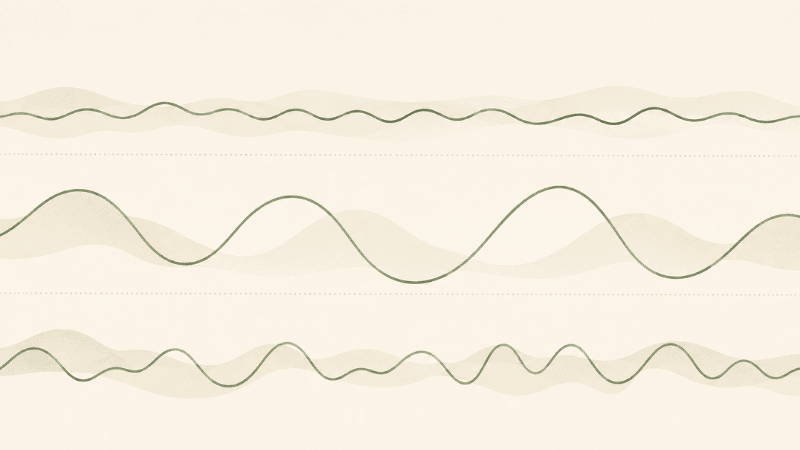
Sleep isn’t a single state. It’s a cycle — roughly 90 minutes long — that your brain repeats four to six times a night, moving through distinct stages with different functions.
Deep sleep, technically called slow-wave sleep (SWS) or N3, occurs primarily in the first half of the night. It’s characterized by large, slow brain waves (delta waves), minimal eye movement, significant muscle relaxation, and the lowest responsiveness to outside stimulation. This is the stage where it’s hardest to wake someone up — and where the most physically restorative work happens.
During deep sleep, your pituitary gland releases growth hormone — not just for children, but for adults too, supporting tissue repair, muscle recovery, and cellular regeneration. Your immune system consolidates its defenses. Cerebrospinal fluid flushes through the brain, clearing out the metabolic waste products that accumulate during waking hours — including amyloid-beta, a protein associated with Alzheimer’s disease. Your body literally cleans itself while you sleep deeply.
The challenge is that deep sleep is the stage most easily disrupted by the conditions of modern life: alcohol, irregular schedules, elevated stress hormones, and a bedroom that’s slightly too warm all preferentially reduce deep sleep while leaving lighter sleep stages relatively intact. You can spend eight hours in bed while spending most of that time in light sleep — which is why so many people wake up feeling unrested despite what looks like adequate sleep.
Why You Might Not Be Getting Enough Deep Sleep
Before you can improve deep sleep, it helps to understand what’s most likely reducing it. Most causes fall into a small number of categories.
Alcohol is the most underestimated disruptor
Alcohol is the single most common reason people don’t get enough deep sleep — and the most widely misunderstood. Many people use alcohol to fall asleep, because it does genuinely increase drowsiness and speed up sleep onset. But what it also does is fragment the second half of the night and significantly suppress REM sleep, while also reducing deep sleep quality overall.
The mechanism: alcohol metabolizes into acetaldehyde, a stimulating compound, roughly 4–5 hours after consumption. This is why people who drink in the evening often wake at 2 or 3am — right when the alcohol metabolite is peaking. Even one or two drinks within three hours of bedtime measurably alters sleep architecture for most people.
Stress and high cortisol directly suppress slow-wave sleep
Your body’s stress system — the hypothalamic-pituitary-adrenal (HPA) axis — and your sleep system are in direct competition at night. Cortisol and slow-wave sleep are essentially antagonists: when one is elevated, the other is suppressed. This is the physiological reason why high-stress periods reliably produce light, fragmented sleep even when you’re exhausted.
Chronic stress doesn’t just affect the nights when you’re actively anxious. It dysregulates the HPA axis over time, leading to persistently elevated evening cortisol levels that quietly erode deep sleep week after week.
An irregular sleep schedule reduces sleep pressure
Deep sleep is partly driven by a force called sleep homeostasis — your body’s accumulating drive to sleep the longer you’ve been awake. The longer and more consistently you stay awake during the day, the more adenosine (a sleep-promoting chemical) builds up, and the more intensely your brain will push for deep sleep when you finally lie down.
Napping too late, sleeping in significantly on weekends, or going to bed at wildly different times disrupts this pressure system — reducing the depth of sleep even when you eventually get to bed.
Your bedroom is probably too warm
Core body temperature drops naturally at sleep onset and continues falling through the early part of the night. This drop is one of the key physiological triggers for deep sleep. A bedroom that’s too warm interferes with this thermoregulatory process, keeping the body in lighter sleep stages.
Most sleep researchers point to 65–68°F (18–20°C) as the optimal range for deep sleep. This is notably cooler than most people keep their bedrooms.
How to Get More Deep Sleep: What Actually Works
Keep an anchor wake time — even when you didn’t sleep well
Of all the behavioral levers for improving sleep quality, a consistent wake time is the most powerful and the most consistently supported by research. It stabilizes your circadian rhythm and ensures that sleep pressure builds reliably each day, which directly benefits deep sleep the following night.
The key insight: you can’t force yourself to fall asleep at a particular time, but you can control when you wake up. Fix the wake time first, and the sleep timing tends to follow. This is the principle underlying sleep restriction therapy in CBT-I — one of the most evidence-based treatments for insomnia.
If your schedule is currently all over the place, start with one rule: wake up within 30 minutes of the same time every day, including weekends, for two weeks. Don’t change anything else. Most people notice a meaningful improvement in sleep depth within 10–14 days.
Lower your bedroom temperature
This is one of the highest-leverage, lowest-effort changes available. If your bedroom is currently 72°F (22°C) or warmer, cooling it to 65–68°F (18–20°C) is likely to produce a noticeable difference in how deeply you sleep.
If you can’t control your room temperature — if you rent, or if you share a bed with someone who runs warmer — there are workarounds:
- Use a fan directed away from you (for air circulation without excessive cooling on the body)
- Sleep with feet uncovered — the feet and hands are primary thermoregulatory surfaces, and keeping them uncovered helps the body radiate heat
- Switch to lighter, more breathable bedding (bamboo or linen rather than heavy cotton or synthetic blends)
- A warm bath or shower 60–90 minutes before bed accelerates the core temperature drop at sleep onset — counterintuitively, warming the body first speeds up the cooling that follows
Time your exercise correctly
Regular exercise is one of the most well-supported interventions for increasing deep sleep duration. Aerobic exercise in particular appears to directly increase slow-wave sleep, possibly through its effects on adenosine accumulation and growth hormone release.
The timing matters. Morning or early afternoon exercise tends to support deeper sleep that night. Late evening vigorous exercise — within 2–3 hours of bed — can delay sleep onset by elevating core temperature and cortisol. That said, individual responses vary considerably; some people sleep well after evening exercise, others don’t. Pay attention to your own pattern.
If you currently don’t exercise regularly, you don’t need to immediately commit to 150 minutes a week. Even a 20–30 minute brisk walk most mornings will begin to shift your sleep architecture within a few weeks.
Cut off alcohol at least three hours before bed
If you drink alcohol and regularly feel unrested despite adequate sleep time, this is likely the highest-leverage change you can make. Moving your last drink to at least three hours before sleep gives your liver time to metabolize the alcohol before the deep-sleep-critical first half of the night begins.
You don’t have to stop drinking entirely to see improvement — the timing matters more than the total amount for sleep quality specifically. A drink with dinner is different from a drink at 10pm.
Get morning light within 30–60 minutes of waking
Morning light exposure anchors your circadian rhythm by suppressing melatonin and setting the timing of your cortisol awakening response. This affects not just when you feel sleepy at night, but the architecture of sleep when you get there — including deep sleep distribution.
Ten to fifteen minutes of outdoor light exposure in the morning — no sunglasses, no phone screen substitutes — is enough to produce a meaningful circadian signal. Even on overcast days, outdoor light is significantly brighter than typical indoor lighting.
This is particularly important for people who work from home and rarely spend time outside during daylight hours.
Use pink noise rather than white noise
White noise is widely used for sleep, and it helps some people by masking disruptive environmental sounds. Pink noise — which contains lower frequencies and sounds more like rain or wind than the sharp hiss of white noise — appears to do something more specific: it synchronizes with and enhances the brain’s slow-wave activity during deep sleep.
A study published in Frontiers in Human Neuroscience found that pink noise played during sleep increased deep sleep brain wave activity and improved memory consolidation the following day. If you use a sound machine, it’s worth switching to a pink noise setting.
Manage stress earlier in the day, not just at bedtime
Bedtime relaxation routines help — and they’re worth building. But if your cortisol is chronically elevated throughout the day, a ten-minute breathing exercise at 10pm isn’t going to undo its effect on deep sleep architecture.
The most effective approach addresses stress throughout the day:
- Physical movement is the most efficient cortisol regulator available — even a ten-minute walk after a stressful meeting begins bringing levels down
- A midday transition ritual — stepping away from screens for ten minutes, going outside briefly, eating lunch without looking at a screen — reduces the cumulative stress load that reaches the evening
- A written shutdown ritual at the end of the workday (write tomorrow’s three priorities, close the laptop deliberately) creates a psychological boundary that reduces work-related rumination at night, which is one of the most direct contributors to light and fragmented sleep
When Deep Sleep Doesn’t Improve Despite Trying
If you’ve genuinely addressed sleep timing, temperature, alcohol, exercise, and stress for four or more weeks and still wake feeling unrested, it’s worth considering whether something else is at play.
Sleep apnea is the most commonly missed cause of poor sleep quality. People with obstructive sleep apnea repeatedly stop breathing during the night — sometimes hundreds of times — causing micro-arousals that fragment sleep and prevent sustained deep sleep. Many people with sleep apnea don’t know they have it because they don’t remember waking. Signs include loud snoring, waking with headaches, excessive daytime sleepiness, or a bed partner reporting pauses in breathing.
Restless legs syndrome (RLS) and periodic limb movement disorder (PLMD) cause physical restlessness and movement during sleep that disrupts deep sleep stages. These have specific medical treatments and are often underdiagnosed.
Depression and anxiety disorders significantly alter sleep architecture, often reducing deep sleep and fragmenting REM sleep. If mood difficulties are part of your experience, addressing them directly — through therapy, medication, or both — typically produces more sleep improvement than any behavioral sleep intervention alone.
Certain medications reduce deep sleep as a side effect, including some antidepressants (particularly SSRIs), beta-blockers, and corticosteroids. If you started a medication and noticed a change in sleep quality, mention it to your prescriber — alternatives are often available.
If You Only Have 10 Minutes Tonight
You don’t need to overhaul everything at once. If tonight is all you have, do one thing: lower your bedroom temperature and put your phone in another room.
The temperature change addresses one of the most direct physiological barriers to deep sleep. The phone removal eliminates the most common source of pre-sleep stimulation and middle-of-the-night disruption. Both take under two minutes to execute.
Tomorrow morning, wake up at the same time regardless of how you slept. That single anchor, repeated consistently, will begin shifting your sleep architecture within two weeks more reliably than almost anything else you can do.
Add one more change each week. Consistency across a small number of changes outperforms sporadic commitment to many.
When to See a Doctor About Your Sleep
Speak with a healthcare provider if:
- You feel unrested most mornings despite sleeping 7–9 hours, and behavioral changes haven’t helped after 4+ weeks
- Your bed partner reports loud snoring, gasping, or pauses in breathing during sleep
- You experience significant daytime sleepiness that interferes with work, driving, or daily function
- You have uncomfortable sensations in your legs at night that create an urge to move them (restless legs)
- Your sleep difficulty is accompanied by depression, persistent anxiety, or significant mood changes
Cognitive Behavioral Therapy for Insomnia (CBT-I) is the first-line recommended treatment for chronic insomnia — more effective than sleep medication in long-term outcomes, and specifically effective at improving sleep architecture including deep sleep. If persistent poor sleep is your reality, it’s worth asking your doctor about a referral.
Frequently Asked Questions
How much deep sleep do adults need per night?
Adults typically spend 13–23% of total sleep time in deep sleep, according to research in Sleep Medicine Reviews. For someone sleeping eight hours, that translates to roughly 60–110 minutes of deep sleep per night. Deep sleep naturally decreases with age — adults over 65 typically get less deep sleep than younger adults — but the quality and consistency of what remains matters considerably.
Why do I feel so tired even after a full night’s sleep?
Feeling unrested after adequate sleep time — sometimes called “non-restorative sleep” — is one of the clearest signs that sleep quality rather than quantity is the issue. The most common causes are too little deep sleep (from alcohol, stress, irregular timing, or temperature), sleep apnea causing unremembered micro-arousals, or a sleep schedule that’s misaligned with your circadian rhythm. It’s worth addressing each of these systematically before assuming the problem is simply “I need more sleep.”
Does melatonin increase deep sleep?
Melatonin primarily regulates sleep timing — signaling to the body that it’s dark and sleep should follow — rather than directly increasing deep sleep duration or quality. It can help you fall asleep at a consistent time, which indirectly supports better sleep architecture by stabilizing circadian rhythm. But it’s not a deep sleep enhancer in the way that exercise, consistent sleep timing, and temperature optimization are.
Can you “make up” lost deep sleep?
Your body does prioritize deep sleep after sleep deprivation — a phenomenon called sleep rebound. If you’ve had several nights of poor deep sleep, the next opportunity for adequate rest will often produce more deep sleep than usual. However, this is an emergency recovery mechanism rather than a reliable system. Chronic sleep debt doesn’t fully recover with weekend catch-up sleep, and the cumulative health effects of ongoing deep sleep deficiency don’t fully reverse either. Consistency matters more than compensation.
Does exercise really improve deep sleep?
Yes, and this is one of the most consistently replicated findings in sleep science. Regular aerobic exercise increases slow-wave sleep duration and intensity, likely through its effects on adenosine accumulation and growth hormone secretion. The effect is more pronounced with morning or early afternoon exercise than late evening exercise, and it builds over weeks of regular activity rather than appearing after a single workout.
Is it normal to wake up in the middle of the night?
Brief awakenings during the night — including at the end of sleep cycles, roughly every 90 minutes — are biologically normal and most people don’t remember them. The question is whether you’re able to fall back asleep quickly, and whether these awakenings are disrupting your overall sleep architecture. Waking at 2–4am and struggling to return to sleep is common but not necessarily normal — it’s often linked to alcohol metabolism, blood sugar fluctuations, elevated cortisol from stress, or sleep apnea.
What foods help increase deep sleep?
No food directly increases deep sleep in a meaningful clinical sense, but some support the conditions for it. Foods containing tryptophan (turkey, eggs, dairy, nuts) support serotonin and melatonin production. Magnesium-rich foods (pumpkin seeds, leafy greens, almonds) support GABA function and muscle relaxation. Complex carbohydrates at dinner may facilitate tryptophan uptake into the brain. More importantly, eating a large meal within 2–3 hours of bed tends to elevate core temperature and increase digestive activity, which directly disrupts sleep quality — particularly deep sleep in the early part of the night.
The Honest Summary
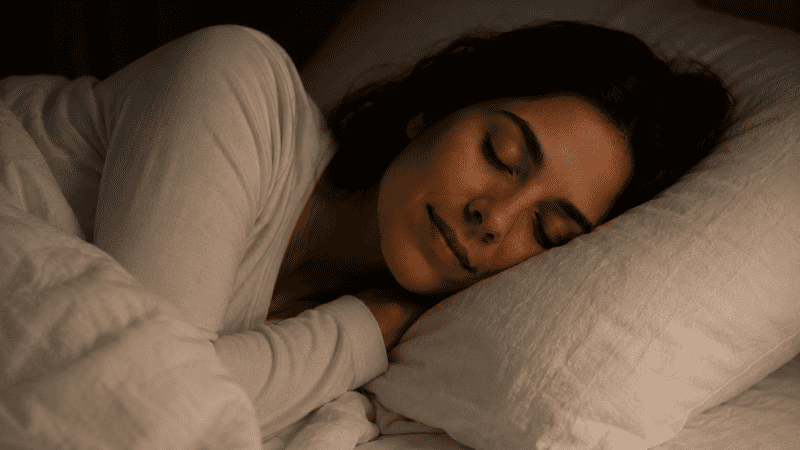
Deep sleep isn’t something you can force. But it is something you can create conditions for — by being consistent about when you wake up, keeping your bedroom cool, moving your body during the day, and giving alcohol enough time to clear before sleep begins.
Start with the simplest lever first. Pick one change, do it every day for two weeks, and notice what shifts. Sleep improvement is cumulative — each small, consistent change compounds on the ones before it. A month from now, if you’re still making one adjustment per week, you’ll have a genuinely different relationship with your nights.
That’s the goal. Not perfect sleep. Just progressively better sleep, built on habits that actually hold.
For a structured evening approach to support deeper sleep, read our guide on building a night routine that actually fits your life. And if you’re waking repeatedly in the early hours, our breakdown of why you wake at 3am may explain what’s happening.
References
- Ohayon, M., Wickwire, E. M., Hirshkowitz, M., Albert, S. M., Avidan, A., Daly, F. J., … & Vitiello, M. V. (2017). National Sleep Foundation’s sleep quality recommendations: First report. Sleep Health, 3(1), 6–19.
- Besedovsky, L., Lange, T., & Haack, M. (2019). The sleep-immune crosstalk in health and disease. Physiological Reviews, 99(3), 1325–1380.
- Czeisler, C. A., & Gooley, J. J. (2007). Sleep and circadian rhythms in humans. Cold Spring Harbor Symposia on Quantitative Biology, 72, 579–597.
- Porcheret, K., Holmes, E. A., Goodwin, G. M., Foster, R. G., & Wulff, K. (2014). Psychological effect of an analogue traumatic event reduced by sleep deprivation. Sleep, 37(6), 1017–1025.
- Papalambros, N. A., Santostasi, G., Malkani, R. G., Braun, R., Weintraub, S., Zee, P. C., & Paller, K. A. (2017). Acoustic enhancement of sleep slow oscillations and concomitant memory improvement in older adults. Frontiers in Human Neuroscience, 11, 109.
- National Institutes of Health, National Institute of Neurological Disorders and Stroke. (2023). Brain basics: Understanding sleep. https://www.ninds.nih.gov/health-information/public-education/brain-basics/brain-basics-understanding-sleep
NourishDAO publishes sleep and wellness content for informational purposes only. This article is not a substitute for professional medical advice, diagnosis, or treatment. If you have ongoing sleep difficulties, please consult a qualified healthcare provider.