
There’s something about making tea before bed that feels inherently hopeful. The kettle’s heat, the small ritual of choosing a blend, the warmth held in both hands — even before you’ve taken a sip, something in the evening has shifted.
But if you’ve been lying awake after your chamomile wondering whether any of this is doing anything real, that’s a fair question. Herbal teas for sleep are everywhere in wellness culture, and the gap between what’s genuinely supported by research and what’s marketing can be hard to navigate. Some are well-studied. Some are promising but limited. Some have essentially no sleep-relevant evidence at all. And some work partly through mechanisms you might not expect.
This guide sorts through all of it — the science behind each tea, the honest limitations, the correct brewing protocol (which matters more than most people realize), and how to use herbal tea as part of a sleep approach that actually holds up. No hype. Just the evidence, clearly explained.
Key Takeaways
- Chamomile is the best-studied herbal tea for sleep, containing apigenin — a flavonoid that binds to GABA-A receptors in the brain, producing mild sedating and anxiolytic effects with a real but modest evidence base.
- Valerian root has the most claims made for it, but also the most mixed research — some trials show benefit for sleep onset, others show no effect; side effects including vivid dreams and morning drowsiness occur in a minority of users.
- Passionflower and lemon balm have emerging evidence for anxiety-driven sleep difficulty and are generally well-tolerated; neither is as extensively studied as chamomile.
- The ritual component of herbal tea — the consistent behavioral signal it creates — contributes meaningfully to its sleep effect, potentially as much as the active compounds themselves.
- Herbal tea is most effective as a consistent nightly practice over 2+ weeks, not as a one-off remedy on a bad night; and it works best paired with basic sleep conditions (consistent timing, cool bedroom, screens off).
How Herbal Tea Actually Affects Sleep
Before getting to specific teas, it helps to understand the two mechanisms through which herbal tea influences sleep — because both matter, and understanding them changes how you use the tea.
The biochemical mechanism
Most sleep-relevant herbal compounds work through the GABAergic system. GABA (gamma-aminobutyric acid) is the brain’s primary inhibitory neurotransmitter — it quiets neural activity, reduces anxiety, and creates the physiological conditions that allow sleep to happen. Several herbal compounds interact with GABA receptors or support GABA activity in ways that produce mild sedating and anxiolytic effects.
This is a real mechanism. It’s the same system targeted by prescription benzodiazepines and certain sleep medications — though herbal compounds interact with it far more weakly, which is why their effects are subtle rather than sedating in the pharmaceutical sense.
The important nuance: most herbal sleep teas don’t produce a drug-like sleep effect. They don’t override wakefulness or sedate you into sleep. They reduce the physiological and psychological activation that prevents sleep — which is exactly what’s needed, and exactly why they’re most effective for anxiety-driven sleep difficulty rather than structural sleep disorders like sleep apnea.
The ritual mechanism
This one is often dismissed as “placebo,” but it’s actually more interesting than that.
When you drink the same tea at the same time every night as part of a wind-down sequence, your nervous system learns to associate the entire sequence — the warmth, the aroma, the quiet, the intentional pause — with sleep onset. This is a conditioned response, and it develops over 2–4 weeks of consistent practice. Over time, even the act of making the tea begins to shift the nervous system toward parasympathetic (rest and digest) dominance, before any compound has been absorbed.
This means the ritual itself is producing real physiological effects — not through belief, but through the same conditioning mechanism that makes all habitual behaviors more automatic over time. It’s why consistency matters more than the specific tea you choose.
The Best Herbal Teas for Sleep: What the Research Actually Shows
Chamomile — The Most Studied, and the Best Starting Point
Evidence quality: Good for anxiety-driven sleep difficulty; limited for primary insomnia
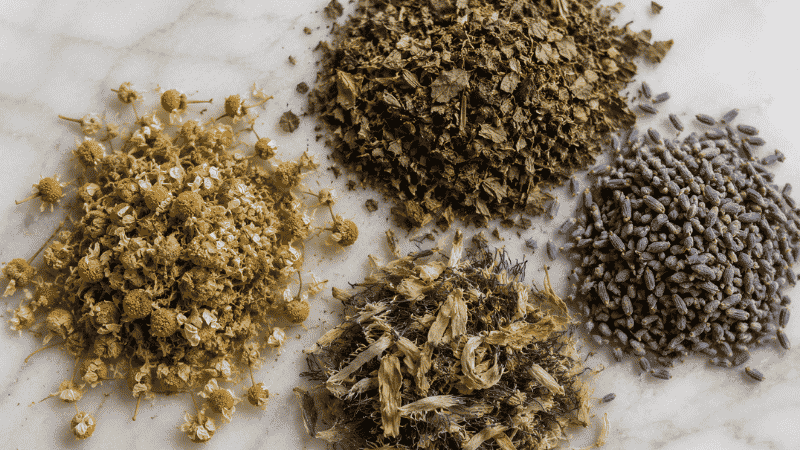
Chamomile (Matricaria chamomilla, the German variety) is the most thoroughly studied sleep tea, and its mechanism is clearly identified. The primary active compound is apigenin, a flavonoid that binds to benzodiazepine receptor sites on GABA-A receptors — the same sites targeted by anti-anxiety medications like diazepam, though with much lower affinity and accordingly milder effects.
A 2016 randomized controlled trial published in the Journal of Advanced Nursing found that postpartum women who drank chamomile tea nightly for two weeks reported significantly reduced physical symptoms of sleep difficulty and lower depression scores compared to controls. A 2017 clinical trial found that elderly adults taking chamomile extract twice daily showed significantly improved sleep quality and reduced nighttime waking compared to placebo.
What chamomile does reliably: reduces the physiological anxiety that prevents sleep initiation, produces mild drowsiness without next-morning impairment, and creates a gentle sensory anchor for a pre-sleep ritual.
What it doesn’t do: override significant insomnia, produce rapid sleep onset, or work equivalently for everyone. Individual response varies considerably.
Who benefits most: People whose sleep difficulty is anxiety-driven or tension-related; new mothers (specifically studied in this population); people who want to build a consistent evening ritual.
Brewing for maximum effect:
- Use 1–2 tablespoons of dried Matricaria chamomilla flowers (German chamomile), or 2 quality tea bags
- Water temperature: 90–95°C (just off the boil)
- Steep time: 8–10 minutes, covered — covering traps the volatile aromatic compounds that contribute to the effect
- Drink 30–45 minutes before bed, not immediately before
Valerian Root — The Most Claimed, the Most Mixed
Evidence quality: Inconsistent; some trials show benefit, others show no effect
Valerian (Valeriana officinalis) is one of the most widely marketed sleep supplements, and it has a longer history of use than almost any other herbal sleep remedy. Its proposed mechanisms include GABA enhancement, interaction with adenosine receptors (the same system targeted by caffeine, in reverse), and antioxidant effects.
The problem is the evidence. A 2021 systematic review in PLOS ONE analyzed 60 studies on valerian and found that while some showed improvements in sleep onset and quality, the overall quality of evidence was low and results were inconsistent across trials. Different preparations, different doses, different populations, and different outcome measures make the research difficult to synthesize.
What’s worth knowing practically: valerian root tea takes longer to show effects than chamomile — many protocols suggest 2–4 weeks of consistent use before assessing benefit. It also has a distinctive earthy smell that many people find unpleasant and that varies considerably between brands.
The side effects are real for a minority of users: vivid dreams, morning grogginess, stomach upset, and headaches have been reported in some trials. These are not common, but they’re documented enough to mention.
Who might benefit: People who haven’t responded to chamomile; those with significant sleep-onset difficulty; people who want to try an herbal approach over a longer trial period.
Who should be cautious: People who cannot tolerate morning grogginess; those on medications that are metabolized by CYP3A4 enzymes (valerian may interact); pregnant or breastfeeding women (limited safety data).
Brewing note: Most valerian root teas have a strong, earthy taste. Blending with other herbs (lemon balm, passionflower, chamomile) significantly improves palatability without reducing effect.
Passionflower — Strong for Anxiety, Emerging for Sleep
Evidence quality: Good for anxiety; promising but limited for sleep specifically
Passionflower (Passiflora incarnata) works primarily through GABAergic mechanisms — increasing GABA activity in the brain in a way that produces anxiolytic effects comparable to some low-dose medications in small studies. A 2011 double-blind trial published in Phytotherapy Research found that passionflower tea significantly improved subjective sleep quality compared to placebo in adults with mild sleep irregularities.
For people whose sleep difficulty has a strong anxiety component — racing thoughts, inability to quiet the mind, tension that won’t release — passionflower is among the more evidence-supported herbal options after chamomile.
It’s generally well-tolerated and has FDA GRAS (Generally Recognized as Safe) status for food use. The caution is the same as most anxiolytic herbs: avoid combining with sedative medications without medical guidance, as additive effects are possible.
Brewing note: Passionflower has a mildly earthy, slightly floral taste that works well blended with chamomile. It’s available as single-herb or in sleep-blend teas.
Lemon Balm — The Underrated Option for Anxious Sleepers
Evidence quality: Good for anxiety and stress; moderate for sleep
Lemon balm (Melissa officinalis) is consistently underrepresented in sleep tea discussions, despite having some of the most consistently positive anxiety research among herbal compounds. A 2014 study found that lemon balm supplementation significantly reduced anxiety and insomnia in adults experiencing chronic stress. A 2011 study found that a combination of lemon balm and valerian root significantly improved sleep quality in adults with insomnia — with lemon balm contributing meaningfully to the effect.
The mechanism is again GABAergic: lemon balm contains rosmarinic acid and other compounds that inhibit the enzyme that breaks down GABA, effectively extending the calming signal. The taste is mild, slightly lemony, and much more palatable than valerian root — which makes it easier to drink consistently.
Who benefits most: People with high daytime stress that hasn’t resolved by bedtime; anyone who finds the stronger-tasting herbs difficult to drink.
Lavender — Best as an Environmental Tool, Not a Tea
Evidence quality: Strong for anxiety via aromatherapy; limited for tea specifically
Lavender (Lavandula angustifolia) has one of the better evidence bases in herbal medicine, but most of the research concerns aromatherapy and topical application rather than tea. The sedating compounds in lavender are primarily linalool and linalyl acetate — which are volatile aromatic compounds, meaning they’re most bioactive when inhaled, not ingested.
That said, lavender tea does expose you to some of these compounds through steam, and the FDA classifies lavender as GRAS. Several studies have found that lavender tea reduced anxiety and depression scores in postpartum women. But if you’re choosing between lavender tea and chamomile tea for sleep effect, the evidence more consistently supports chamomile.
Where lavender is most valuable: as an environmental addition to your sleep ritual. A few drops of lavender essential oil on a pillowcase, or in a diffuser at low concentration, delivers the aromatic compounds through inhalation — which is where the strongest evidence sits.
Other Teas Worth Mentioning
Green tea (low-caffeine): Contains L-theanine, an amino acid that promotes relaxation without sedation and has been shown to improve sleep quality in people with anxiety. The catch is the caffeine — standard green tea contains 25–45mg per cup. If you want the L-theanine benefit, look specifically for low-caffeine or decaffeinated green tea, or take L-theanine as a standalone supplement.
Magnolia bark tea: Less commonly available but has some evidence for cortisol reduction and GABA modulation. Worth exploring if the mainstream options haven’t worked.
Ashwagandha tea: An adaptogen with growing evidence for cortisol regulation and stress reduction, which can indirectly improve sleep in high-stress individuals. Takes several weeks of consistent use to show effect.
How to Get the Most from Your Herbal Tea — The Brewing and Timing Protocol
Most people brew herbal tea for sleep incorrectly — which means they’re getting a fraction of the active compound content and a weaker effect.
Source matters: Many supermarket tea bags contain chamomile or valerian “dust” — the lowest-grade remnants of processing — rather than whole or cut flowers and roots. For sleep purposes, use:
- Whole dried flowers (chamomile, lavender)
- Cut and sifted dried root (valerian)
- Or tea bags from a brand that explicitly sources whole herb material
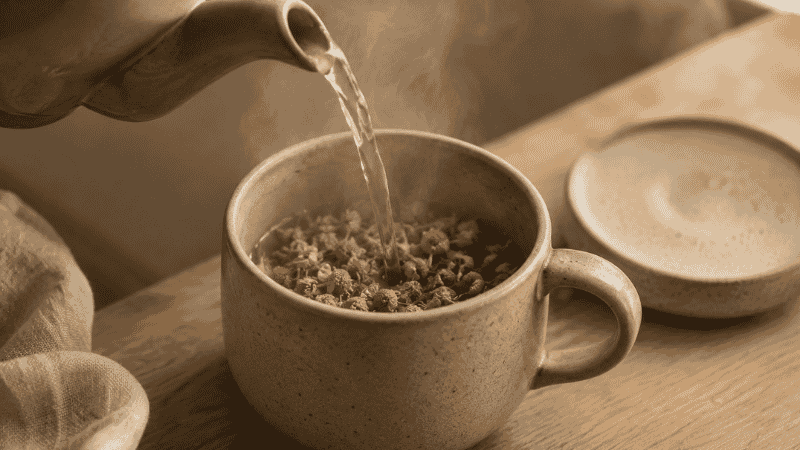
Steeping time matters: Most people steep for 3–5 minutes. For sleep-relevant compounds, aim for 8–10 minutes, covered. The lid traps both heat and volatile aromatic compounds that contribute to the effect.
Amount matters: Use 1–2 tablespoons of dried herb per 8oz, or 2 quality tea bags. A weak cup of chamomile tea has noticeably less apigenin than a properly prepared one.
Timing matters: Drink your tea 30–45 minutes before bed, not immediately before. This gives the active compounds time to be absorbed and begin influencing GABA receptor activity before you lie down. It also means you’re not going to bed with a full bladder, which would undermine the benefit.
Consistency matters most: One night of chamomile tea tells you very little. The behavioral conditioning component builds over 2+ weeks of nightly practice. The compounds also accumulate. Give any herbal tea a genuine 2-week trial before assessing whether it’s helping.
Matching the Right Tea to Your Sleep Problem
| Your sleep difficulty | Best starting tea | Notes |
|---|---|---|
| Anxiety and racing mind | Chamomile or passionflower | Most directly addresses the physiological driver |
| General tension and restlessness | Chamomile + lemon balm blend | Double GABAergic support |
| Significant sleep-onset difficulty | Valerian root (with patience) | Requires 2–4 weeks for effect |
| Postpartum sleep and mood | Chamomile (studied in this population) | Well-supported, generally safe while breastfeeding in tea form — confirm with provider |
| Perimenopause and night waking | Chamomile + magnesium glycinate combination | Tea addresses anxiety component; magnesium addresses nervous system regulation |
| You dislike strong herbal flavors | Lemon balm or chamomile | Most palatable options; blend with honey if needed |
When Herbal Tea Isn’t Enough
Herbal tea is a gentle, evidence-supported tool — and like all gentle tools, it has a ceiling. The following situations warrant more than a cup of tea:
- Sleep difficulty has persisted for more than 2–3 weeks despite consistent efforts — this warrants a healthcare provider conversation
- Sleep difficulty is accompanied by loud snoring, gasping, or waking with headaches — possible sleep apnea, which requires medical evaluation
- Significant anxiety or low mood extending into the day, not just at bedtime — this often responds better to therapy or medical support than to herbal remedies alone
- Medications that interact with GABAergic compounds — sedatives, anti-anxiety medications, and some antidepressants can interact with valerian and passionflower; always mention herbal use to your prescribing doctor
- Pregnancy: chamomile in tea form is generally considered low-risk in moderate amounts, but concentrated herbal supplements and certain herbs (valerian, passionflower) have insufficient safety data during pregnancy — confirm any herbal use with your OB or midwife
If You Only Have 10 Minutes Tonight
Make a proper cup of chamomile — two tablespoons of dried German chamomile flowers or two quality tea bags, steeped for 8–10 minutes with a lid on, drunk 40 minutes before your target sleep time.
While it steeps, dim every light in your space and put your phone in another room.
That’s it. The tea addresses the biochemical component of bedtime anxiety. The dimming addresses the melatonin component. The phone removal addresses the cognitive activation component. Ten minutes, no cost, no prescription. Done consistently for two weeks, most people who try this report a meaningful shift in how the evening transition feels.
Frequently Asked Questions
What is the best herbal tea for sleep?
Chamomile is the best-studied option with the most consistently supportive evidence for anxiety-driven sleep difficulty. It contains apigenin, which binds to GABA-A receptors and produces mild sedating and anxiolytic effects with a well-established mechanism. For people who haven’t responded to chamomile, passionflower and lemon balm have good emerging evidence. Valerian root has the most mixed research despite being heavily marketed.
How long before bed should I drink herbal tea?
30–45 minutes before your target sleep time. This timing allows active compounds to be absorbed and begin acting on GABA receptors before you lie down, and avoids the sleep disruption of going to bed with a full bladder. Drinking tea immediately before bed reduces the pharmacological benefit while maintaining the ritual benefit.
Does herbal tea for sleep actually work?
Yes, with realistic expectations. The evidence most clearly supports herbal tea for anxiety-driven sleep difficulty — where the primary barrier to sleep is nervous system activation rather than structural causes. Chamomile, passionflower, and lemon balm all have research support for this use. The effect is gentle — not sedating in the pharmaceutical sense — and builds over consistent use. Don’t expect dramatic results on night one; do expect gradual improvement over 2+ weeks.
Is it safe to drink herbal tea every night?
For most adults, yes. Chamomile and lemon balm are very well-tolerated for nightly use with no known tolerance or dependency effects. Valerian root has more reported side effects and more herb-drug interaction potential. For pregnant or breastfeeding women, any herbal tea should be confirmed safe with a healthcare provider — chamomile tea in moderate amounts is generally considered low-risk, but concentrated extracts and less-studied herbs warrant caution.
Why doesn’t herbal tea make me sleepy?
The most common reasons: low-quality tea bags (chamomile dust vs. whole flowers), insufficient steeping time (3 minutes vs. 8–10), drinking it immediately before bed rather than 30–45 minutes before, or expecting a sedating effect that herbal tea simply doesn’t produce. Herbal teas create conditions for sleep by reducing anxiety and activating parasympathetic tone — they’re not pharmaceutical sedatives. If you’re expecting to feel dramatically sleepy, you may be disappointed; if you’re expecting your mind to feel slightly quieter and your body slightly more settled, that’s what the research supports.
Can herbal tea replace melatonin?
They work through different mechanisms and address different aspects of sleep. Melatonin primarily regulates sleep timing — signaling to the body that darkness has arrived. Herbal tea reduces anxiety-driven arousal that prevents sleep initiation. They’re not interchangeable, though they can be used complementarily. For most people with anxiety-driven sleep difficulty, herbal tea is a better fit than melatonin.
The Honest Bottom Line on Herbal Tea for Sleep
Herbal tea for sleep is neither magic nor marketing. The active compounds are real, the mechanisms are real, and the research support — especially for chamomile — is genuine, if modest. The ritual is also real, and likely contributes as much as the biochemistry in many cases.
What herbal tea won’t do: overcome significant insomnia, resolve sleep apnea, or produce dramatic sedation. What it can do: reduce the anxiety-driven activation that prevents sleep initiation, provide a consistent behavioral anchor for your evening, and make the transition from your day to your bed feel measurably calmer.
Use it consistently, brew it correctly, give it two weeks, and pair it with a cool bedroom and an evening that isn’t full of screens. That combination — simple, low-cost, and genuinely supported by the research — is more effective than most people expect.
For the complete evening approach to pair with your herbal tea practice, read our guide on building a night routine for better sleep. And for the science behind chamomile specifically — including its apigenin mechanism and the 2-week consistency principle — our full chamomile tea for sleep guide covers it in depth.
References
- Chang, S. M., & Chen, C. H. (2016). Effects of an intervention with drinking chamomile tea on sleep quality and depression in sleep disturbed postnatal women: A randomized controlled trial. Journal of Advanced Nursing, 72(2), 306–315.
- Hieu, T. H., et al. (2019). Therapeutic efficacy and safety of chamomile for state anxiety, generalized anxiety disorder, insomnia, and sleep quality: A systematic review and meta-analysis. Phytotherapy Research, 33(6), 1604–1615.
- Ngan, A., & Conduit, R. (2011). A double-blind, placebo-controlled investigation of the effects of Passiflora incarnata (passionflower) herbal tea on subjective sleep quality. Phytotherapy Research, 25(8), 1153–1159.
- Cases, J., et al. (2011). Pilot trial of Melissa officinalis L. leaf extract in the treatment of volunteers suffering from mild-to-moderate anxiety disorders and sleep disturbances. Mediterranean Journal of Nutrition and Metabolism, 4(3), 211–218.
- National Center for Complementary and Integrative Health. (2023). Valerian. https://www.nccih.nih.gov/health/valerian
NourishDAO publishes sleep and wellness content for informational purposes only. This article is not a substitute for professional medical advice, diagnosis, or treatment. If you are pregnant, breastfeeding, or taking prescription medications, consult a qualified healthcare provider before adding herbal teas or supplements to your routine.