
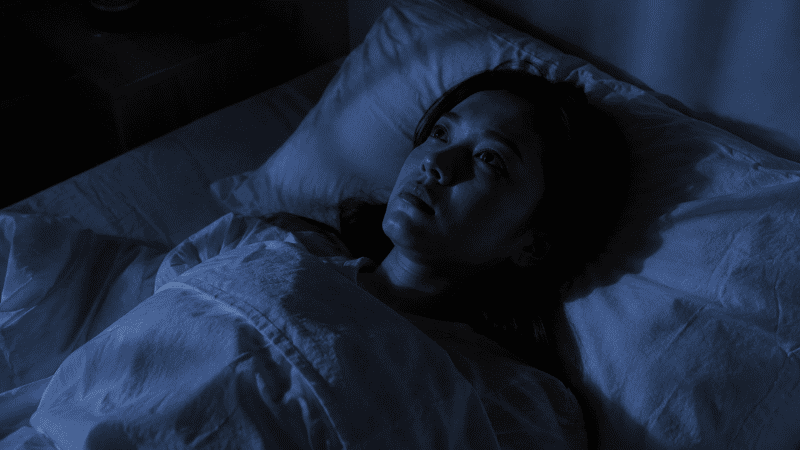
Yes — and the relationship runs deeper than most people realize.
Lack of sleep doesn’t just leave you tired and irritable. It actively changes how your brain processes threat, regulates emotion, and responds to stress. After a night of poor sleep, anxiety isn’t a side effect you’re imagining — it’s a predictable neurological consequence of what happened in your brain while you weren’t sleeping.
But here’s what makes this particularly important: the relationship doesn’t stop there. Anxiety then makes sleep harder, which produces more anxiety, which further disrupts sleep. This is one of the most well-documented and most damaging cycles in mental health — and most people caught inside it don’t recognize what’s happening because the two halves of the loop feel like separate problems.
This guide explains the complete picture: the neuroscience of why sleep deprivation causes anxiety, how anxiety disrupts sleep in return, what the cycle looks like from the inside, and — most importantly — where and how it can be interrupted.
Key Takeaways
- Yes, lack of sleep can directly cause anxiety. Research from UC Berkeley found that sleep deprivation increases activity in the brain’s fear center (amygdala) by up to 60% compared to well-rested states.
- The mechanism is neurological: sleep deprivation impairs the prefrontal cortex — the brain’s rational regulator — while amplifying the amygdala’s threat response, producing anxiety that is physiologically induced, not imagined.
- According to the Anxiety and Depression Association of America, anxiety disorders affect approximately 40 million American adults — and the majority also experience some form of sleep disruption.
- The sleep-anxiety relationship is bidirectional: anxiety disrupts sleep, and disrupted sleep intensifies anxiety. Without deliberate interruption, the cycle compounds.
- Cognitive Behavioral Therapy for Insomnia (CBT-I) is the most evidence-based treatment for the behavioral component of the cycle and is more effective than sleep medication in long-term outcomes.
What Happens to Your Brain When You Don’t Sleep
To understand why lack of sleep causes anxiety, you need to understand what sleep deprivation does to the brain — specifically, to the two regions most responsible for emotional regulation.
The amygdala becomes hyperactive
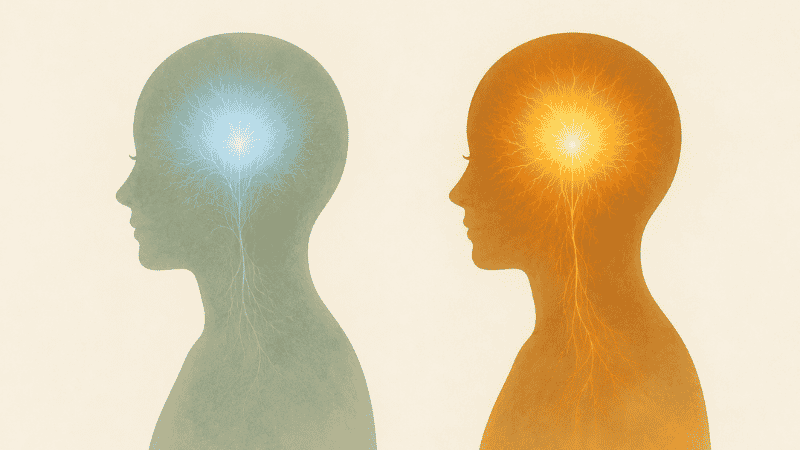
The amygdala is the brain’s primary threat-detection center. It processes potentially dangerous stimuli and initiates the fear and anxiety response — triggering the hormonal cascade that produces cortisol, adrenaline, and the physical symptoms of anxiety: racing heart, tense muscles, shallow breathing, hypervigilance.
Under normal conditions, the amygdala is kept in check by the medial prefrontal cortex — the rational, executive region of the brain that evaluates whether a threat is real, proportionate, and worthy of a full stress response.
When you’re sleep-deprived, this regulatory relationship breaks down. A landmark study by Matthew Walker and colleagues at UC Berkeley, published in Current Biology, found that sleep deprivation increased amygdala reactivity by approximately 60% compared to a well-rested baseline. Simultaneously, the functional connectivity between the amygdala and the medial prefrontal cortex — the calming regulatory connection — was significantly reduced.
The result is a brain that is simultaneously more reactive to threat signals and less capable of rationally evaluating whether those signals require a full stress response. This is the neurological substrate of anxiety. And it is produced directly by sleep loss.
Cortisol doesn’t fall as it should
Under healthy conditions, cortisol — the body’s primary stress hormone — follows a predictable daily rhythm: peaking in the early morning and gradually declining through the day, reaching its lowest point during sleep. This nighttime trough is essential: it gives the body and brain a recovery period from the stress of the day, and it’s part of what allows the nervous system to regulate mood and emotional reactivity the following morning.
When sleep is insufficient or fragmented, cortisol doesn’t complete this decline. Elevated residual cortisol entering the next day primes the body for threat response before anything stressful has actually happened. You wake up in a physiological state closer to “already anxious” than to “calm and ready.”
REM sleep processes emotional memories — and without it, they accumulate
REM sleep — which is concentrated in the final hours of the night — serves a crucial function in emotional regulation. During REM, emotional memories from the day are processed and their affective charge is reduced. This is sometimes described as “overnight therapy”: the brain replays difficult experiences but strips away their emotional intensity, allowing them to be stored as ordinary memories rather than as charged, anxiety-producing material.
When REM sleep is cut short — by an early alarm, by alcohol in the system, or by a fragmented night — this processing doesn’t complete. Emotionally loaded experiences from the previous day remain raw. Anticipation of difficult events feels more threatening. The emotional tone of the following day begins at a higher baseline of distress.
This is one of the reasons people who are chronically sleep-deprived often describe a general sense of low-level anxiety or dread that they can’t attach to a specific cause. It isn’t irrational. It’s accumulated unprocessed emotional content from nights of insufficient REM sleep.
The Bidirectional Cycle: How Anxiety Disrupts Sleep in Return
The fact that sleep deprivation causes anxiety would be damaging enough on its own. What makes it a cycle is that anxiety is itself one of the most powerful disruptors of sleep.
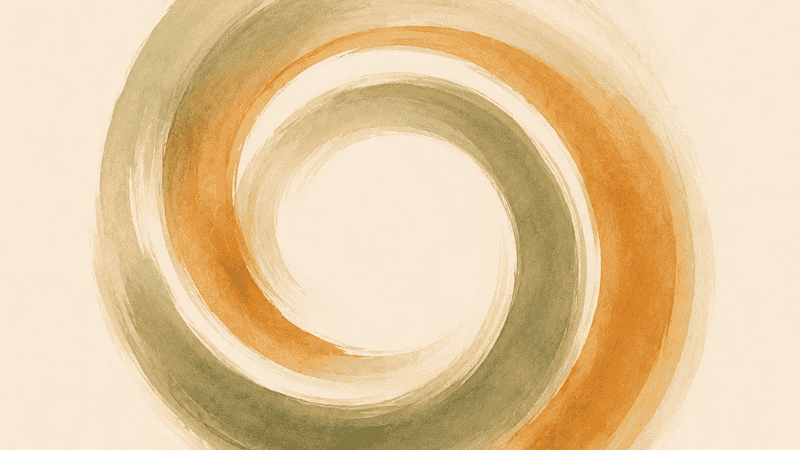
Anxiety activates the sympathetic nervous system at bedtime
The physiological state required for sleep is essentially the opposite of the anxiety state. Sleep requires parasympathetic nervous system dominance — slowed heart rate, reduced cortisol, muscle relaxation, and a mind that is able to release its monitoring function. Anxiety activates the sympathetic nervous system — producing elevated heart rate, heightened cortisol, muscle tension, and a mind that is scanning for threat.
These two states are physiological antagonists. When anxiety is present at bedtime, the conditions required for sleep onset are directly opposed by the conditions that anxiety creates. You lie down tired but find that your body is activated and your mind will not quiet.
The racing mind prevents sleep onset and maintains waking
Cognitive hyperactivation — the anxious mind generating content at high speed, cycling through worries, planning, rehearsing, catastrophizing — is one of the most common immediate causes of sleep onset difficulty. The silence and stillness of the bedroom remove the distractions that interrupt anxious thought during the day, and the result is that 11pm becomes the loudest hour of the anxious person’s day.
This racing thought pattern is self-reinforcing. The more you lie awake aware of your thoughts, the more frustrated you become about not sleeping. That frustration adds another layer of activation. And the awareness of time passing — the calculation of how much sleep remains — adds anticipatory anxiety about tomorrow’s impairment.
Secondary anxiety about sleep itself develops
Over time, a third layer emerges. After enough nights of lying awake, the bed itself becomes associated with wakefulness and frustration rather than rest. Bedtime becomes a trigger for anxiety — not just the anxiety you brought with you, but a new anxiety specifically about whether you will sleep.
This is called psychophysiological insomnia, and it represents the point at which the original anxiety and the sleep difficulty have merged into a self-sustaining loop. The anxiety doesn’t need to be about anything external anymore. The sleep problem itself has become the source of anxiety.
What the Cycle Looks Like From the Inside
People inside the sleep-anxiety loop often describe variations of the same experience:
They feel generally on edge — not dramatically anxious, but with a low-level hum of unease that doesn’t have a clear source. Small stressors feel disproportionately difficult. Patience is shorter than usual. Concentration requires more effort. The emotional buffer that normally exists between events and reactions seems thinner.
At night, they lie down tired and find that their mind activates. Thoughts arrive quickly and feel important. The worry content varies — work, relationships, health, finances, the future — but the pattern is consistent: the moment the environment goes quiet, the mind fills the space.
They may fall asleep eventually, or they may not. They may sleep for a few hours and then wake at 3 or 4am with an already-active mind. In the morning, they feel worse than the night before — which they attribute to not sleeping well, without recognizing that the previous night’s anxiety contributed to the poor sleep, and the poor sleep is now producing today’s anxiety.
The cycle is experienced as two separate problems — “I’m anxious” and “I can’t sleep” — when it is actually one self-sustaining loop.
How to Interrupt the Loop
The cycle has two entry points, and interrupting either one will begin to affect the other.
Address the sleep side: rebuild the conditions for sleep

Anchor your wake time. A consistent morning wake time — held every day within 30 minutes, including weekends — stabilizes the circadian rhythm and builds sleep pressure reliably. This is the single most powerful behavioral change available for improving sleep continuity, and it works even when you’re not sleeping well. Getting up at the same time after a bad night is one of the most important things you can do to prevent the next bad night.
Apply the 20-minute rule. If you’ve been awake for more than 20 minutes, get out of bed. Go somewhere dim and quiet. Do something low-stimulation. Return to bed when you feel genuinely drowsy. This is stimulus control therapy — the behavioral approach with the strongest evidence for breaking the bed-wakefulness association. It is uncomfortable and counterintuitive, and it works.
Remove the clock. Clock-watching after waking activates a calculation sequence — remaining sleep time, predicted impairment, tomorrow’s difficulty — that is a reliable anxiety amplifier. Turn the clock away from the bed or remove it from the room.
Use extended-exhale breathing for acute nighttime anxiety. When the exhale is longer than the inhale, it directly stimulates the vagus nerve and shifts the nervous system toward parasympathetic dominance. Inhale for 4 counts, exhale for 6 or 8. Repeat 5–10 cycles. This can meaningfully reduce the physiological arousal that prevents sleep onset within 1–2 minutes.
Address the anxiety side: reduce the load before it reaches the bedroom
Move stress management to daytime. Bedtime relaxation techniques work best for maintaining low arousal, not for dramatically lowering high arousal. Reducing the anxiety load before it reaches the bedroom is more effective than trying to undo it at 11pm. Physical movement — a 20–30 minute walk in the morning or early afternoon — is the most efficient cortisol regulator available and directly improves both anxiety and sleep architecture.
Use structured worry time. Set aside 15 minutes in the early evening — not at bedtime — to write down what you’re worried about and any possible next steps. When worries surface at night, the knowledge that they’ve been given their scheduled time gives the brain partial permission to defer them. This is not suppression; it’s scheduling.
Write tomorrow’s to-do list before bed. Research from Baylor University published in the Journal of Experimental Psychology found that writing a specific to-do list for tomorrow — not journaling about today — significantly reduced time to sleep onset. The proposed mechanism: offloading the task-tracking burden from active working memory to paper reduces the brain’s felt need to continue processing during sleep.
Cognitive restructuring for sleep catastrophizing. One of the most anxiety-amplifying patterns in the sleep-anxiety loop is catastrophic thinking about sleep itself: “If I don’t get 8 hours I won’t be able to function,” “Every bad night is doing permanent damage,” “I’ll never be able to sleep normally again.” These thoughts are anxiety-generating and largely inaccurate. Most people function adequately after poor nights — not optimally, but adequately. Recognizing the distortion gently, without forcing a positive spin, is the beginning of loosening the cognitive component of the cycle.
When the Cycle Has Become Chronic
If the sleep-anxiety loop has been running for more than three months and isn’t responding to behavioral self-management, it has likely become entrenched enough to benefit from structured treatment.
Cognitive Behavioral Therapy for Insomnia (CBT-I) is the first-line evidence-based treatment for insomnia — including insomnia that is driven by or intertwined with anxiety. It is more effective than sleep medication in long-term outcomes and specifically addresses both the behavioral patterns (stimulus control, sleep restriction, consistent timing) and the cognitive ones (catastrophizing, hypervigilance, secondary sleep anxiety) that sustain the loop. CBT-I is available through sleep medicine therapists and increasingly through validated digital programs.
Therapy for anxiety — particularly Cognitive Behavioral Therapy (CBT) — addresses the anxiety side of the loop directly and has been shown to improve sleep as a secondary outcome. If anxiety is significantly present during the day and affecting multiple areas of your life, addressing it directly through therapy is likely to produce more sleep improvement than sleep-specific behavioral interventions alone.
Consider speaking with a healthcare provider if:
- Sleep-anxiety difficulties have persisted for more than three months despite genuine behavioral effort
- Anxiety is significantly impairing your daytime function — work, relationships, safety
- You experience panic attacks at night, which feel distinctly different from ordinary anxiety: sudden intense physical symptoms, an overwhelming sense of threat, feeling of unreality
- Low mood or depression accompanies the sleep and anxiety difficulties
Frequently Asked Questions
Can lack of sleep cause anxiety?
Yes, directly and through well-established neurological mechanisms. Sleep deprivation increases amygdala reactivity — the brain’s fear center — by up to 60% while simultaneously impairing the prefrontal cortex’s ability to regulate that response. The result is a brain that is more reactive to perceived threats and less capable of rational evaluation. This is the physiological substrate of anxiety, and it is produced by sleep loss.
Can poor sleep make anxiety worse?
Yes, and this is one of the most important things to understand about the sleep-anxiety relationship. If you already have anxiety, poor sleep will reliably intensify it — because the neurological changes produced by sleep deprivation (amygdala hyperreactivity, elevated cortisol, incomplete emotional memory processing) directly amplify the anxiety response. This is why addressing sleep is often a meaningful part of anxiety treatment.
What comes first — anxiety or insomnia?
Either can come first, and both can sustain the other once the loop is established. Sometimes an anxiety disorder disrupts sleep, and the chronic sleep disruption then begins producing its own anxiety about sleeping. Sometimes a period of poor sleep for other reasons (stress, illness, a life event) produces anxiety through the neurological mechanisms described above, which then makes sleep harder. By the time most people seek help, both are present and mutually reinforcing.
How long does it take for sleep deprivation to cause anxiety?
The effects on emotional regulation begin after a single night of poor sleep. A study measuring amygdala reactivity showed significant increases after just one night of sleep deprivation. Subjective anxiety — the felt experience of increased worry and emotional sensitivity — typically becomes noticeable after 1–2 nights of significantly reduced sleep for most people. Chronic anxiety driven by ongoing sleep deprivation develops over weeks to months of consistently poor sleep.
How do I break the sleep-anxiety cycle?
The most effective approach addresses both sides simultaneously. On the sleep side: consistent anchor wake time, the 20-minute rule, removing the clock, extended-exhale breathing for acute nighttime anxiety. On the anxiety side: physical movement during the day, structured worry time, a bedtime brain dump of tomorrow’s tasks, and cognitive restructuring for sleep catastrophizing. If the cycle has been running for more than 3 months without improvement, CBT-I is the most evidence-based next step.
Does treating insomnia reduce anxiety?
Research suggests yes — improving sleep quality through behavioral interventions produces measurable reductions in anxiety symptoms as a secondary outcome. This makes biological sense: when the amygdala is no longer chronically hyperactivated by sleep deprivation, and when REM sleep is completing its emotional memory processing function, baseline anxiety levels decrease. Sleep improvement and anxiety improvement are not separate goals in this context — they’re two expressions of the same underlying restoration.
The Honest Summary
Can lack of sleep cause anxiety? Yes — through mechanisms that are now well-understood, well-documented, and directly actionable.
The amygdala becomes hyperreactive. The prefrontal cortex loses its regulating influence. Cortisol stays elevated. REM sleep fails to process the emotional residue of the day. The result is a brain that wakes up anxious, remains anxious throughout the day, and then finds it impossible to quiet that anxiety enough to sleep the following night.
Recognizing the loop is the first step out of it. Because once you understand that your anxiety may be substantially driven by your sleep — and that your poor sleep is substantially driven by your anxiety — the intervention points become clear. You don’t have to wait for the anxiety to resolve before improving your sleep, and you don’t have to wait for sleep to improve before addressing the anxiety. You can work on both simultaneously, from both directions, and let the biology do the rest.
For the complete guide to sleeping with anxiety — including the specific techniques that interrupt the cycle at bedtime — read our guide on how to sleep with anxiety. And if waking in the early hours has become part of your pattern, our guide on why you keep waking up at 3am explains the cortisol and conditioned arousal mechanisms in detail.
References
- Simon, E. B., Rossi, A., Harvey, A. G., & Walker, M. P. (2020). Overanxious and underslept. Nature Human Behaviour, 4(1), 100–110.
- Yoo, S. S., Gujar, N., Hu, P., Jolesz, F. A., & Walker, M. P. (2007). The human emotional brain without sleep — a prefrontal amygdala disconnect. Current Biology, 17(20), R877–R878.
- Scullin, M. K., Krueger, M. L., Ballard, H. K., Pruett, N., & Bliwise, D. L. (2018). The effects of bedtime writing on difficulty falling asleep: A polysomnographic study comparing to-do lists and completed activity lists. Journal of Experimental Psychology: General, 147(1), 139–146.
- Anxiety and Depression Association of America. (2023). Facts and statistics about anxiety disorders. https://adaa.org/understanding-anxiety/facts-statistics
- Harvey, A. G. (2002). A cognitive model of insomnia. Behaviour Research and Therapy, 40(8), 869–893.
- National Institute of Mental Health. (2023). Anxiety disorders. https://www.nimh.nih.gov/health/topics/anxiety-disorders
NourishDAO publishes sleep and wellness content for informational purposes only. This article is not a substitute for professional medical advice, diagnosis, or treatment. If you are experiencing symptoms of an anxiety disorder or persistent sleep difficulty, please consult a qualified healthcare provider.