In the world of herbal infusions, few drinks capture the senses quite like hibiscus tea. Its striking ruby-red hue, reminiscent of a summer sunset, is just the beginning of its charm. Beyond the aesthetic appeal, the goodness of hibiscus tea lies in its centuries-old reputation as a “healing elixir” in cultures ranging from Ancient Egypt to modern-day Mexico.
Whether you are a wellness enthusiast looking to swap your afternoon caffeine or a tea lover seeking a tart, cranberry-like refreshment, understanding the good benefits of drinking hibiscus tea can transform your daily hydration into a powerful health ritual.
1. What Exactly is the Goodness of Hibiscus Tea?
The goodness of hibiscus tea is not just a marketing buzzword; it is a complex profile of bioavailable compounds. Unlike “true” teas (black, green, or oolong) derived from Camellia sinensis, hibiscus is a tisane made from the Hibiscus sabdariffa plant.
An Antioxidant Powerhouse
At the heart of its benefits are anthocyanins—the same potent antioxidants found in blueberries and blackberries. These compounds do the “heavy lifting” by neutralizing free radicals in your body, reducing oxidative stress, and giving your skin that sought-after healthy glow.
A Natural Vitamin C Boost
If you feel a seasonal chill coming on, reaching for a cup of hibiscus is a wise move. It is naturally packed with Vitamin C, which supports your immune system and aids in collagen production.
2. Deep Dive: The Good Benefits of Drinking Hibiscus Tea
When we talk about the good benefits of drinking hibiscus tea, we aren’t just talking about hydration. Clinical studies have begun to back up what herbalists have known for generations.
Heart Health and Blood Pressure Management
One of the most celebrated good benefits of drinking hibiscus tea is its impact on cardiovascular health.
- The Science: A study published in the Journal of Nutrition demonstrated that participants who drank three 8-ounce servings daily saw a significant drop in systolic blood pressure compared to a placebo group.
- How it works: Hibiscus acts as a mild, natural diuretic and may help mimic the effects of ACE inhibitors, helping blood vessels relax.
Metabolism and Weight Management
Are you looking for a natural way to support your fitness goals? Some research suggests that hibiscus extract may reduce the absorption of starch and glucose. While it’s not a “miracle pill,” replacing sugary sodas with unsweetened hibiscus tea is a fantastic way to lower calorie intake while boosting metabolic health.
Liver Health Support
Antioxidants in hibiscus help protect the liver from toxins. By promoting a healthy inflammatory response, the goodness of hibiscus tea ensures your body’s primary detox organ functions at its peak.
Pro Tip: If you find the flavor too tart, avoid processed sugar. Instead, stir in a teaspoon of raw honey or a few stevia leaves to keep the health benefits intact.
3. Botanical Clarity: Which Part of Hibiscus is Good for Tea?
One of the most common mistakes beginners make is picking random hibiscus flowers from their garden. To get the best flavor and potency, you must know which part of hibiscus is good for tea.
It’s All About the Calyx
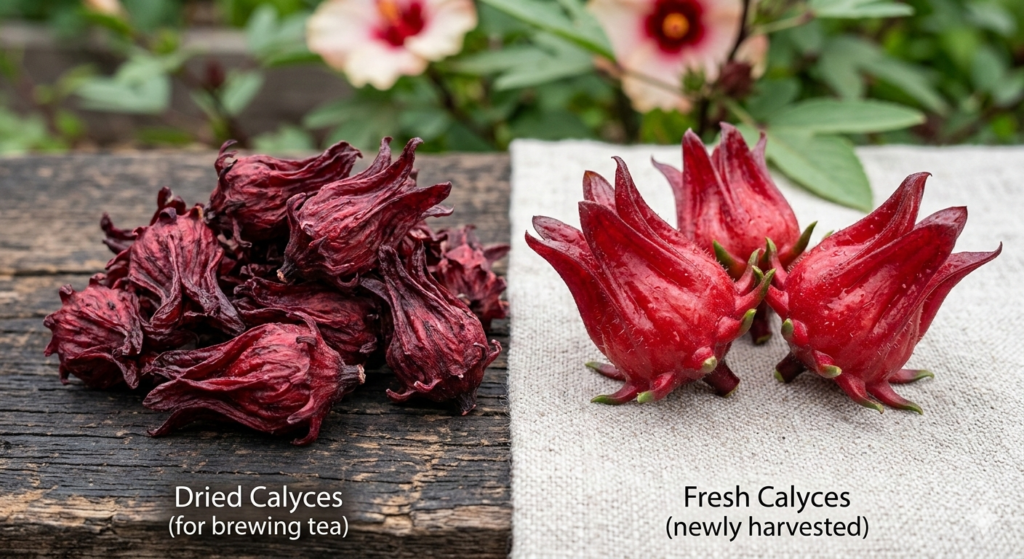
Contrary to popular belief, it isn’t the delicate, colorful petals that make the tea. After the flower blooms and the petals wither away, a small, fleshy, bright red “bulb” remains at the base of the flower. This is the calyx.
- The Calyx: This protective cup protects the seed pod. It is thick, succulent, and contains the highest concentration of acids and antioxidants.
- Identification: When shopping for tea, look for deep red, dried pieces that feel slightly leathery. If you see only thin, papery flower petals, you likely won’t get that signature tartness or the full goodness of hibiscus tea.
4. Finding Balance: What is a Good Daily Intake of Hibiscus Tea?
As with any potent herbal remedy, moderation is key. You might wonder, what is a good daily intake of hibiscus tea to see results without overdoing it?
Recommended Dosage
For most healthy adults, a good daily intake of hibiscus tea is 1 to 2 cups (approx. 8–16 oz) per day. This amount is generally considered safe and effective for reaping cardiovascular and antioxidant rewards.
Factors to Consider:
| User Profile | Recommended Intake | Note |
| General Wellness | 1 cup daily | Perfect for antioxidant maintenance. |
| Blood Pressure Support | 2 cups daily | Space them out (morning and evening). |
| Sensitive Stomachs | 0.5 cup daily | Hibiscus is acidic; start small to avoid acid reflux. |
Who Should Be Cautious?
- Pregnancy: Hibiscus may affect estrogen levels. It is widely recommended to avoid it during pregnancy or while breastfeeding.
- Low Blood Pressure: Because it lowers blood pressure, those who already have hypotension should monitor their intake closely.
- Medication Interference: If you are on diuretics or Chloroquine, consult your doctor first.
5. The Brewing Ritual: How to Extract the Best Flavor
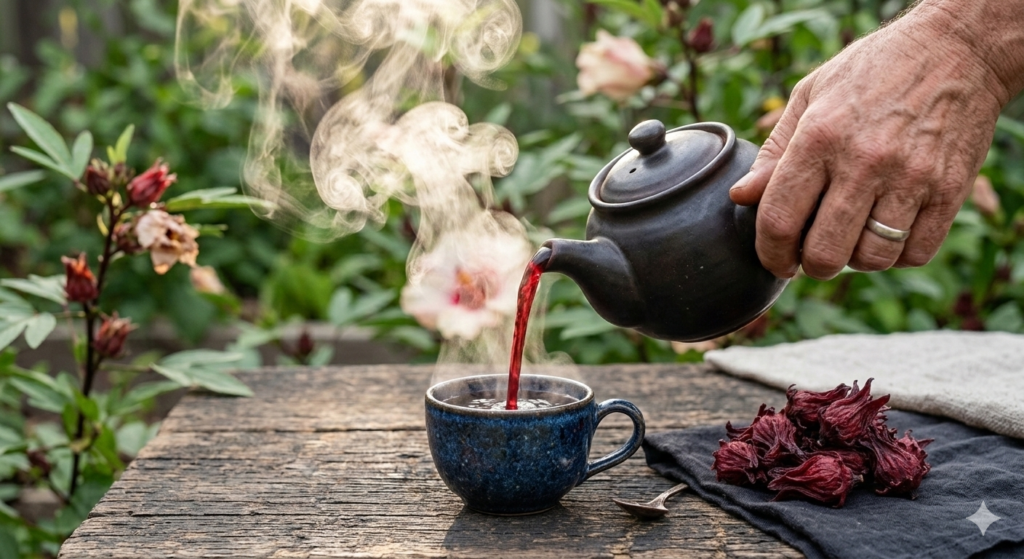
To truly experience the goodness of hibiscus tea, you must brew it correctly. Here is my “Golden Ratio” recipe for a perfect cup:
- Water Temp: Bring fresh, filtered water to about 200°F (93°C). Avoid a rolling boil as it can “scorch” the delicate organic acids.
- The Ratio: Use 2 teaspoons of dried hibiscus calyces for every 8 oz of water.
- The Steep: Let it sit for 5–8 minutes. You will notice the water turning a deep, opaque crimson within seconds.
- The Twist: Add a slice of ginger or a cinnamon stick during the steep to enhance the good benefits of drinking hibiscus tea with anti-inflammatory properties.
6. Frequently Asked Questions (FAQ)
Does hibiscus tea have caffeine?
No. It is naturally 100% caffeine-free, making it an excellent “wind-down” drink for the evening.
Can I drink it cold?
Absolutely! In Mexico, it’s known as Agua de Jamaica. Simply double the strength of the brew and pour it over ice with a squeeze of lime.
Does it stain teeth?
Like red wine or coffee, the deep pigments in hibiscus can stain enamel over time. A quick rinse of water after drinking is usually enough to keep your smile bright.
Conclusion: Embrace the Crimson Glow
The goodness of hibiscus tea extends far beyond its refreshing taste. It is a bridge between ancient tradition and modern science—a simple, affordable way to support your heart, liver, and skin.
By understanding which part of hibiscus is good for tea and maintaining a good daily intake of hibiscus tea, you are not just drinking a beverage; you are investing in a healthier version of yourself.
My Gentle Advice: Tomorrow afternoon, put down the coffee mug and reach for a glass of crimson hibiscus. Let the tartness wake up your senses and the antioxidants nourish your cells. Your body will thank you.