

Saturday morning. The alarm doesn’t go off. You sleep until 9:30, maybe 10, maybe past that. It feels necessary — like a debt being repaid, like your body finally getting what it was owed. You spend the first hour in a pleasantly groggy haze, drink your coffee slowly, feel almost human. You tell yourself: okay, now I’m caught up.
And then Monday comes, and by Tuesday afternoon you’re running on fumes again. The weekends never quite seem to close the gap.
Most people operating with a chronic sleep debt have a complicated relationship with weekend sleep. They know, somewhere, that sleeping in isn’t fully solving the problem. But they’re also genuinely tired, and the extra sleep does feel like it helps, at least temporarily. So they keep doing it, week after week, hoping the deficit will eventually even out.
Here’s the honest answer to whether you can catch up on sleep: partially, sometimes, in specific ways — and not in the way most people hope. This guide covers what the research actually says, what sleep debt does to the body before you’ve recovered it, and — more usefully — what actually reduces it over time.
Key Takeaways
- You can partially recover from sleep debt, but not completely, and not by sleeping in once or twice. The cognitive and health impacts of chronic sleep deprivation are not fully reversed by weekend sleep.
- A 2018 study published in the Journal of Sleep Research found that people who caught up on sleep over weekends showed lower mortality rates than those who remained chronically sleep-deprived — but the protective effect was limited and came with significant caveats.
- Oversleeping on weekends — more than 1–2 hours beyond your weekday wake time — creates social jet lag, disrupts circadian rhythm, and can cause the same cognitive grogginess it’s meant to cure.
- According to the CDC, 1 in 3 American adults regularly sleep fewer than 7 hours per night. This means the majority of weekend sleep-in attempts are compensating for an ongoing structural deficit, not an occasional bad week.
- The most effective strategy for sleep debt is not recovery — it’s prevention through consistency, and the second-most effective is gradual incremental payback over multiple days, not one marathon sleep session.
What Is Sleep Debt, Exactly?
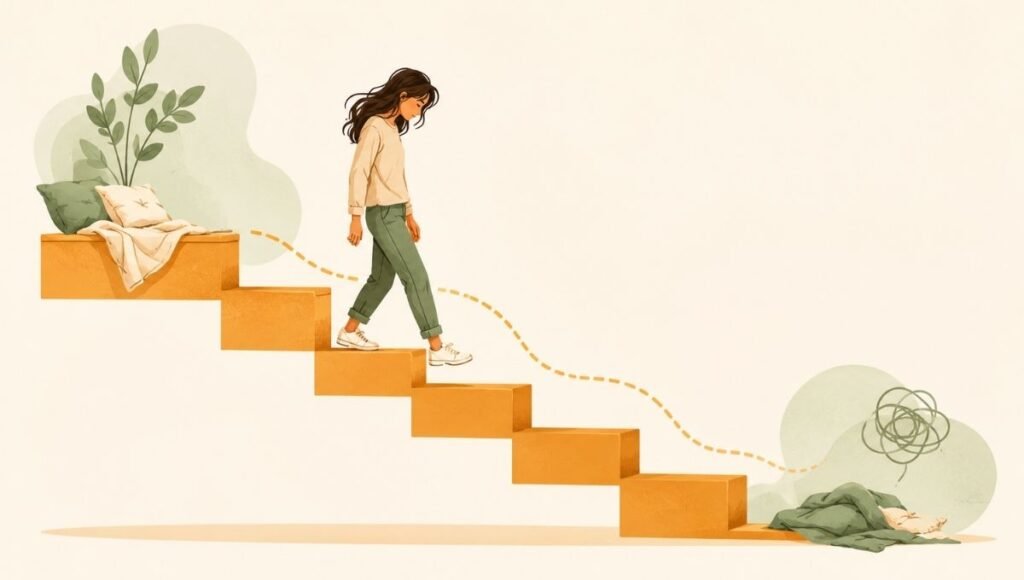
Sleep debt is the accumulated difference between the sleep your body needs and the sleep it actually gets. It’s not metaphorical — it’s a physiological state with measurable consequences.
Most adults need 7–9 hours per night. If you’re consistently sleeping 6, you’re accumulating a one-to-two-hour deficit each day. Over a five-day work week, that’s 5–10 hours of sleep debt that your weekend is being asked to repay. For most people, sleeping in on Saturday and Sunday adds perhaps 2–4 additional hours of sleep. The math does not work out.
Sleep debt is also not uniform in what it takes from you. Different aspects of sleep deprivation recover at different rates, through different mechanisms. Cognitive performance — particularly sustained attention, working memory, and reaction time — is among the slowest to recover. Emotional regulation often feels better after even partial recovery sleep. The metabolic and hormonal effects of sleep debt (elevated cortisol, disrupted glucose regulation, increased ghrelin) may require consistent, sustained sleep before they normalize.
This heterogeneity matters because it means “catching up on sleep” is too simple a concept. You might feel better on Monday after a long weekend sleep — and you might genuinely be partially recovered — while still carrying significant unresolved sleep debt in other domains.
Can You Actually Catch Up on Sleep? What the Research Says
The optimistic finding
A 2018 study published in the Journal of Sleep Research followed a large Swedish cohort over many years and found that people who slept five or fewer hours on weekdays but caught up on weekends showed no significantly higher mortality risk than those who consistently slept the recommended amount. This was widely (and somewhat breathlessly) reported as “you can catch up on sleep.”
What the study actually showed was narrower: catching up on sleep may partially mitigate some of the long-term mortality risk associated with chronic short sleep. That’s meaningfully different from “weekend sleep debt is fully reversible.”
The less optimistic findings
A 2019 study from the University of Colorado, published in Current Biology, put this to a more rigorous test. Participants were restricted to five hours of sleep per night for five days. One group was allowed weekend recovery sleep; another was not. Both groups showed increased caloric intake, weight gain, and metabolic disruption. The recovery sleep group improved on some measures — but not all. And critically, when the recovery sleep group returned to the five-hours-per-night schedule the following week, their metabolic dysfunction rapidly returned to the same level as the non-recovery group.
The implication: weekend catch-up sleep can provide partial short-term recovery, but it doesn’t appear to “reset” the system in a way that makes the following week of sleep deprivation less damaging.
A separate body of research from the University of Pennsylvania (the Walker and Dinges labs) has repeatedly found that cognitive performance under sleep restriction does not fully recover to baseline even after multiple nights of recovery sleep. The subjective feeling of recovery — how rested you feel — returns faster than the objective performance measures.
In plain terms: you might feel caught up before you actually are.
The social jet lag problem

There’s a cost to the catch-up strategy that doesn’t get discussed enough: sleeping significantly later on weekends than weekdays creates a version of jet lag that recurs every single week.
Your circadian rhythm is anchored primarily by your wake time. When you wake at 6:30 on weekdays and 9:30 on weekends, your body’s internal clock shifts later by several hours over the weekend — and then has to shift back on Monday. This weekly circadian disruption is called social jet lag, and research published in Current Biology found it is independently associated with poorer sleep quality, higher BMI, and increased fatigue — even when total sleep hours appear adequate.
The weekend sleep-in that’s meant to restore you is simultaneously making the following week harder.
What Sleep Debt Actually Does Before You’ve Recovered It
Understanding the real stakes of ongoing sleep debt helps explain why recovery matters and why partial measures are insufficient.
Cognitive function. Sustained attention is among the most sensitive measures of sleep deprivation. Research from the University of Pennsylvania found that subjects sleeping six hours per night for two weeks performed as poorly on sustained attention tasks as subjects who had been awake for 24 consecutive hours — and critically, rated their own impairment as minimal. You stop feeling as tired before you’ve stopped being as impaired.
Emotional regulation. Sleep-deprived people show increased amygdala reactivity and decreased prefrontal cortex regulation — in practice, this means heightened emotional reactivity, lower frustration tolerance, and a tendency toward negative interpretation of neutral events. If you’ve ever snapped at someone after a run of bad nights and felt surprised by your own reaction, this is the mechanism.
Immune function. Research published in Archives of Internal Medicine found that people sleeping fewer than 7 hours per night were nearly three times more likely to develop a cold when exposed to the rhinovirus compared to those sleeping 8 or more hours. The immune impact of sleep deprivation is not about “feeling run down” — it’s measurable suppression of actual immune defense.
Metabolic effects. Chronic sleep deprivation elevates ghrelin (hunger hormone), reduces leptin (satiety hormone), and increases cortisol — producing a hormonal environment that increases appetite, reduces impulse control around food, and specifically drives preferences for high-calorie, high-carbohydrate options. This is why people often eat more and feel less satisfied when they’re running on insufficient sleep.
How to Actually Reduce Sleep Debt
The gradual payback approach

Rather than trying to repay the entire debt in one or two long sleep sessions, a more physiologically appropriate approach is incremental payback over several days or weeks.
Going to bed 30 minutes earlier each night — not sleeping in later in the morning — is more effective for several reasons: it builds sleep pressure consistently, it doesn’t disrupt the morning circadian anchor, and it doesn’t create social jet lag. Over a week or two, 30 minutes earlier per night adds up to meaningful additional sleep without creating the circadian disruption of weekend-only recovery.
The key distinction: extend sleep at the front end (earlier bedtime), not the back end (later wake time).
Protect the anchor wake time
This is the most important single behavioral variable in sleep debt recovery. Your morning wake time anchors your entire circadian system. When it’s consistent — within 30 minutes, every day including weekends — your circadian rhythm stabilizes, sleep pressure builds predictably, and the quality of sleep improves across the week.
Allowing yourself to sleep a maximum of 30–45 minutes later on weekends than on weekdays is a reasonable compromise that adds some additional sleep without producing meaningful circadian disruption. Beyond that, the tradeoff starts working against you.
Strategic napping
A 15–20 minute nap taken before 2pm can meaningfully reduce the functional impact of sleep debt on the same day without significantly disrupting nighttime sleep. The key constraints: under 20 minutes (to avoid entering deep sleep and waking groggy), before 2pm (to prevent reducing sleep pressure enough to affect nighttime sleep onset).
For people in acute sleep debt — new parents, people recovering from illness, those in a sustained high-demand period — strategic early-afternoon napping is one of the most effective tools available for maintaining function while gradually repaying the debt.
Improve sleep quality within the available window
When total sleep time is structurally limited — by genuine schedule constraints rather than choices — maximizing the quality of the sleep you do get becomes critically important. The same seven hours of sleep in a cool, dark, quiet room, timed correctly in your circadian cycle, is significantly more restorative than seven hours of fragmented sleep in a warm, bright room.
The highest-leverage quality improvements: bedroom temperature at 65–68°F (18–20°C), complete darkness, consistent timing, and eliminating alcohol within three hours of sleep (alcohol suppresses deep sleep and fragments the second half of the night even when consumed in moderate amounts).
If You’re Currently Running a Large Sleep Debt
The most important reframe is this: you’re not trying to pay back a specific number of hours. You’re trying to restore a physiological system to a state where it’s functioning properly — which is a process, not a transaction.
This week, the goal is to not add more debt. Go to bed 30 minutes earlier than your current average. Keep your morning wake time consistent. Skip the nightcap. These changes won’t produce a dramatic recovery in the first few days — they’ll reduce the rate at which the debt is growing while the system begins to stabilize.
Over two to four weeks of consistent practice, most people report a noticeable improvement in morning energy, afternoon alertness, emotional baseline, and sleep quality. Not because they’ve dramatically changed how much they’re sleeping, but because the consistency has allowed the circadian system to stabilize and sleep to become more efficient.
When Sleep Debt Requires More Than Habit Changes
Sleep debt is sometimes a lifestyle management problem. But it’s sometimes a symptom of something that behavioral changes alone won’t address.
Consider speaking with a healthcare provider if:
- You’re consistently sleeping 7–9 hours and still feel significantly sleep-deprived during the day — this may indicate sleep apnea, which is disrupting the quality and architecture of your sleep without reducing the hours. Sleep apnea is both common and very treatable.
- Sleep difficulty has persisted for more than three months despite genuine consistent behavioral effort — this meets the threshold for chronic insomnia, which responds well to CBT-I (Cognitive Behavioral Therapy for Insomnia)
- You feel excessively sleepy during the day in passive situations (meetings, as a passenger in a car, after sitting quietly for a few minutes) — this degree of sleepiness warrants evaluation
- Sleep debt is accompanied by significant mood changes, low motivation, or difficulty experiencing pleasure — these symptoms may indicate depression, which has a bidirectional relationship with sleep deprivation
Frequently Asked Questions
Can you catch up on sleep over the weekend?
Partially. Research shows that weekend catch-up sleep can reduce some of the mortality risk associated with chronic sleep deprivation and may partially improve some symptoms. However, it does not fully reverse the cognitive, metabolic, and immune impacts of the preceding week’s sleep debt — and sleeping significantly later on weekends creates social jet lag that makes the following week harder.
How long does it take to recover from sleep deprivation?
It depends on the severity and duration. Acute sleep deprivation from a single bad night can be substantially recovered within 1–2 nights. Chronic sleep debt accumulated over weeks or months takes considerably longer — research suggests full cognitive recovery may take more than a week of consistent adequate sleep. Subjective recovery (how rested you feel) tends to precede objective cognitive recovery.
Is it bad to sleep in on weekends?
Sleeping 30–45 minutes later on weekends than weekdays is unlikely to produce meaningful circadian disruption. Beyond that, sleeping significantly later creates social jet lag — a weekly circadian shift that is independently associated with poorer sleep quality, higher BMI, and increased fatigue. The concern isn’t the extra sleep; it’s the circadian disruption that comes with large swings in wake time.
How do I know if I have sleep debt?
Common indicators: needing an alarm to wake up (your body hasn’t naturally completed its sleep cycle), feeling significantly more rested on days you can sleep as long as you want, relying on caffeine to feel functional, falling asleep rapidly in passive situations (reading, riding in a car, watching TV), or noticing that your mood, patience, and cognitive performance are better after nights of more sleep.
Does deep sleep help more with recovery?
Yes, significantly. Deep slow-wave sleep is the most physically restorative sleep stage — it’s when growth hormone is released, tissue repair occurs, immune function is most active, and the brain clears metabolic waste. When you’re sleep-deprived, your body prioritizes deep sleep in recovery nights — you spend a higher proportion of the night in slow-wave sleep than usual. This is why you can feel substantially restored after a good recovery night even if the total hours were not dramatically more than usual.
The Honest Reframe

Catching up on sleep the way most people do it — sleeping in on Saturday and Sunday, then repeating the weekday deficit — is a bit like making the minimum payment on a credit card. It keeps the situation from getting worse in the short term, and it provides some genuine temporary relief. But the debt doesn’t shrink. And the long-term cost keeps accruing.
The better strategy is less dramatic: go to bed 30 minutes earlier, keep the morning consistent, eliminate the alcohol that’s fragmenting the second half of your nights, and stop adding to the debt while you gradually pay it back. It’s slower than a 10-hour Saturday sleep. It’s also the version that actually works.
For the behavioral foundations that prevent sleep debt from accumulating in the first place, read our guide on how to fix your sleep schedule. And if you’re waking in the early hours and losing sleep that way rather than going to bed late, our guide on waking up in the middle of the night covers every fixable cause.
References
- Akerstedt, T., Ghilotti, F., Grotta, A., et al. (2018). Sleep duration and mortality — Does weekend sleep matter? Journal of Sleep Research, 28(1), e12712.
- Depner, C. M., Melanson, E. L., Eckel, R. H., et al. (2019). Ad libitum weekend recovery sleep fails to prevent metabolic dysregulation during a repeating pattern of insufficient sleep and free access to recovery sleep. Current Biology, 29(6), 957–967.
- Cohen, S., Doyle, W. J., Alper, C. M., Janicki-Deverts, D., & Turner, R. B. (2009). Sleep habits and susceptibility to the common cold. Archives of Internal Medicine, 169(1), 62–67.
- Roenneberg, T., Allebrandt, K. V., Merrow, M., & Vetter, C. (2012). Social jetlag and obesity. Current Biology, 22(10), 939–943.
- Centers for Disease Control and Prevention. (2024). Sleep and sleep disorders — Data and statistics. https://www.cdc.gov/sleep
NourishDAO publishes sleep and wellness content for informational purposes only. This article is not a substitute for professional medical advice, diagnosis, or treatment. If you have persistent sleep difficulties, please consult a qualified healthcare provider.