
Most people treat sleep like a light switch—something you just flip at 11 PM and expect instant results. But after years of testing sleep stacks and consulting with clients who are “tired of being tired,” I’ve realized that quality rest is less about that moment your head hits the pillow and more about the sleep habits you bake into your day.
If you’re staring at the ceiling at 2 AM or dragging yourself to the coffee pot every morning, you don’t need another generic “tip.” You need a system. Achieving deep, restorative sleep is a physiological process that requires you to respect your body’s biology while aggressively optimizing your environment.
The Science of “Deep Rest” (And Why Your Habits Are Failing)
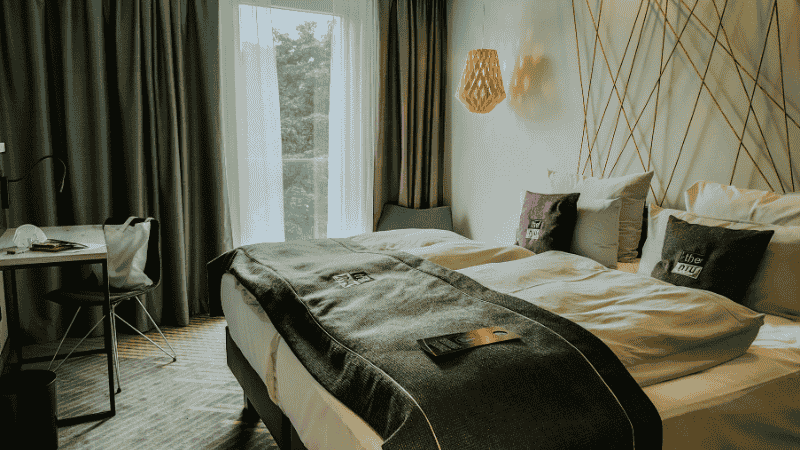
Here’s the hard truth: your body doesn’t care about your schedule; it cares about light and temperature. Your circadian rhythm is a delicate balance between Cortisol (the “go” hormone) and Melatonin (the “slow” hormone).
The biggest mistake I see? People try to “force” sleep with a pill while their environment is screaming at their brain to stay awake. If your room is 72°F and your phone screen is hitting your retinas, you’ve already lost the battle. Your core temperature needs to drop, and your cortisol needs to tank for your brain to transition into the deep, anabolic stages of sleep.
What Most Sleep Guides Don’t Tell You
Most advice focuses on a single “magic bullet,” but the reality is more nuanced:
- Consistency > Intensity: An inconsistent routine is the #1 killer of deep rest. Going to bed at 10 PM on weekdays and 2 AM on weekends creates “social jetlag.”
- Systems, Not Just Products: A weighted blanket won’t fix a caffeine addiction. Sleep products only provide ROI when integrated into a functional system.
- Environment is King: You can have the best habits in the world, but if your room is noisy or bright, your brain will stay in “vigilance mode” (shallow sleep).
Phase 1: The Daytime Set-Up (Anchoring Your Clock)
Better sleep starts the second you open your eyes. To get your melatonin levels to spike at 10 PM, you have to “anchor” your internal clock in the morning.
Morning Light Exposure
I tell my clients to get 10 to 20 minutes of direct sunlight before they even check their email. Natural light exposure first thing in the morning sets a biological timer.
The Caffeine Reality Check
Caffeine has a half-life of about 6 hours. That “innocent” 3 PM latte is still half-active in your system at 9 PM. It’s not just about “falling” asleep; it’s about the quality of that sleep. Caffeine blocks adenosine—the “sleep pressure” that makes you feel drowsy—leading to a night of shallow, restless tossing.
Phase 2: The Night Routine System (The 3-2-1 Protocol)
The hour before bed is what I call the “Transition Zone.” You cannot go from 100 mph to 0 mph without a buffer.
The 3-2-1 Routine
- 3 Hours Before Bed: Stop eating. Digestion raises your core body temperature—the exact opposite of what you want.
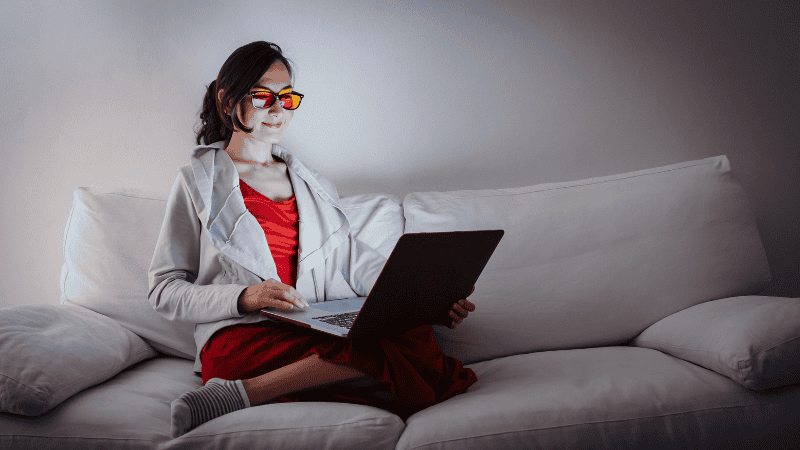
- 2 Hours Before Bed: Shut down the laptop. If you’re still “problem-solving,” your brain is in a high-beta wave state, which is incompatible with deep sleep.
- 1 Hour Before Bed: Kill the blue light.
Sleep Improvement Tools: The Supplement Trap
I’ve tested dozens of melatonin brands, and frankly, most people take too much. It often leads to “melatonin hangovers.” Instead, I’ve had much better success with Magnesium Glycinate. It’s not a sedative; it’s a mineral that helps your nervous system chill out. It’s the difference between being knocked out and actually drifting off naturally.
Phase 3: Sleep Environment Optimization (The “Cave” Method)
Your bedroom should be a cool, dark sensory deprivation tank. If it’s not, you’re leaving sleep quality on the table.
Lighting Conditions
Even the standby light on your TV can suppress melatonin. I’m a huge advocate for a Contoured Sleep Mask. Not the cheap flat ones that press on your eyeballs, but the “cup” style that allows you to blink. It ensures 100% total darkness, which is a massive signal to your brain that it’s time for deep REM cycles.
Temperature Control: The 65°F Rule
This is the most overlooked factor. The sweet spot for most people is 65°F to 68°F (18°C – 20°C).
- The Tester’s Choice: A high-quality Weighted Blanket is a game-changer for restless sleepers. The “deep pressure touch” lowers cortisol. However, look for one with “cooling” glass beads; if you get a cheap polyester one, you’ll wake up in a sweat at 2 AM.
Managing the Sound Floor
Sudden noises—a dog barking, a car door—don’t always wake you up, but they do kick you out of deep sleep. A dedicated White Noise Machine creates a “sound floor” that masks these spikes. Unlike a phone app, a real machine provides a rich, analog frequency that doesn’t loop or glitch.
Troubleshooting Real-World Sleep Scenarios
Scenario: “I wake up at 3 AM with my mind racing.”
This is a classic cortisol spike. Do not check the time. The second you see “3:14 AM,” your brain starts doing “sleep math,” which triggers more anxiety.
- The Fix: Try Cognitive Shuffling. Pick a word like “OXYGEN.” Think of all the words you can that start with O, then X, then Y. It’s just boring enough to break the anxiety loop.
Scenario: “I sleep 8 hours but wake up feeling like a wreck.”
This usually means your sleep habits are okay, but your environment is sabotaging your deep sleep. You’re likely sleeping too hot or in a room that isn’t dark enough. Your body is “asleep,” but it’s struggling to stay in the restorative stages because it’s trying to regulate its temperature all night.
Our Trust & Review Standards
At NourishDao, we believe sleep is a pillar of health. Our recommendations are built on:
- Science-Based Principles: We prioritize the fundamentals of circadian biology over “trendy” gadgets.
- Product Selection Criteria: We test for build quality, material safety (Oeko-Tex/CertiPUR-US), and real-world efficacy.
- General Wellness Disclaimer: While our advice is based on wellness research, we are not medical professionals. If you suffer from chronic insomnia or sleep apnea, please consult a physician.
FAQ
Why do I wake up at the same time every night? This is often due to a “conditioned arousal” or a blood sugar dip. If your body expects a stressor at 3 AM (like a racing mind), it will wake you up to prepare. Fixing your daytime cortisol and evening 3-2-1 routine usually resolves this.
What is the best time to sleep? For most, the “golden window” is between 10 PM and 11 PM. This aligns with the natural drop in outdoor light and temperature, making it easier for your body to transition into deep sleep stages before midnight.
Do sleep gadgets really work? Only as part of a system. A white noise machine is incredibly effective if your environment is noisy, but it won’t fix poor sleep hygiene like scrolling on your phone in bed.
How long does it take to fix a sleep cycle? Consistency is key. Most people see a significant shift in energy levels within 7 to 14 days of strict adherence to morning sunlight and the evening 3-2-1 protocol.
The Ultimate “Sleep Stack” System
If you’re ready to stop guessing, here is how I suggest stacking these tools:
- For the Anxious Sleeper: Magnesium Glycinate + Weighted Blanket + Cognitive Shuffling.
- For the Light Sleeper: Contoured Mask + White Noise Machine + 66°F Room Temp.
- For the “Night Owl” Reset: Sunrise Alarm + Morning Sun + 3-2-1 Rule.
Deep rest isn’t a luxury; it’s the result of a well-executed system. Start with one habit, add one tool, and stop letting poor sleep dictate your life.
Hi, this is a comment.
To get started with moderating, editing, and deleting comments, please visit the Comments screen in the dashboard.
Commenter avatars come from Gravatar.